Tag: climate change

Portugal’s Low-Carbon Diet Initiative Explained [Blog #33]

Portugal’s revised National Energy and Climate Plan (NECP 2030) includes a groundbreaking initiative to promote a “low-carbon diet,” focusing on reducing animal protein consumption and encouraging plant-based protein alternatives. Here are some key elements:  

National Strategy for Plant-Based Protein: The plan calls for a dedicated national strategy to promote plant-based protein consumption. This strategy will involve:

  • Research and Development: Investing in research and development of plant-based protein sources, including legumes, pulses, and alternative protein technologies.  
  • Promotion and Education: Implementing public awareness campaigns to educate the public about plant-based diets’ environmental and health benefits.
  • Supporting Plant-Based Food Production: Encouraging the growth of domestic plant protein production to reduce reliance on imports.  
  • Expanded Plant-Based Meal Options: The plan emphasizes the need to expand the availability of plant-based meal options in public canteens, schools, hospitals, and other public institutions.  
  • Reduced Meat Consumption: While the plan doesn’t explicitly call for reducing meat consumption, the focus on plant-based protein consumption implicitly suggests a shift towards a more plant-centric diet.

Anticipated Impacts:

  • Reduced Greenhouse Gas Emissions: Shifting towards a more plant-based diet can significantly reduce greenhouse gas emissions from agriculture, a major contributor to climate change.  
  • Improved Public Health: A plant-based diet can offer numerous health benefits, including reduced risk of chronic diseases such as heart disease, type 2 diabetes, and certain types of cancer.  
  • Increased Food Security: Promoting the production of plant-based proteins can enhance food security and reduce reliance on imported animal feed.  

Portugal’s inclusion of a plant-based protein strategy in its national climate plan sets an important precedent and could inspire other countries to adopt similar measures to address the environmental and health impacts of their food systems.

Why did Portugal take such a dramatic step? and why did it focus on the national food system?

Portugal’s revised climate plan focuses on the food system for several key reasons:  

  • Significant Environmental Impact of Animal Agriculture:
    • Greenhouse Gas Emissions: Animal agriculture is a major contributor to greenhouse gas emissions, particularly methane from livestock.  
    • Deforestation: Clearing land for animal feed and grazing contributes to deforestation and biodiversity loss.  
    • Water Pollution: Animal waste can contaminate water sources and contribute to environmental degradation.  
  • Addressing a Major Source of Emissions: By focusing on dietary shifts, Portugal aims to address a significant source of greenhouse gas emissions within its borders.  
  • Promoting Public Health: Shifting towards a more plant-based diet can offer numerous health benefits, such as reducing the risk of chronic diseases like heart disease, type 2 diabetes, and certain cancers.  
  • Food Security: Promoting plant-based protein production can enhance food security and reduce reliance on imported animal feed.
  • Global Leadership: By incorporating a plant-based protein strategy into its national climate plan, Portugal is demonstrating global leadership in addressing the environmental and social impacts of the food system.

In essence, Portugal’s decision to focus on its food system in its revised climate plan reflects a growing understanding of the interconnectedness of food systems, climate change, and human health.


Dear reader, If you wish to make a donation so I can improve this blog and add more value, I would be very obliged. thanks!

One-Time
Monthly
Yearly

Make a one-time donation

Make a monthly donation

Make a yearly donation

Choose an amount

C$5.00
C$15.00
C$100.00
C$5.00
C$15.00
C$100.00
C$5.00
C$15.00
C$100.00

Or enter a custom amount

C$

Your contribution is appreciated.

Your contribution is appreciated.

Your contribution is appreciated.

DonateDonate monthlyDonate yearly
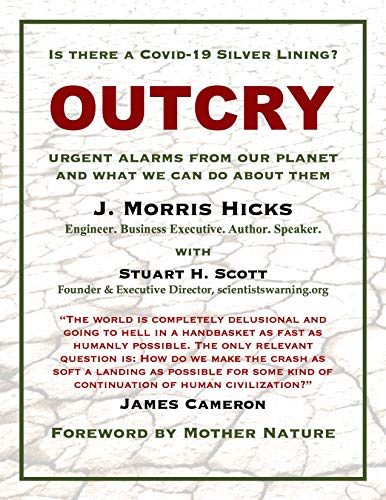
“Outcry” [Blog #20)

“Outcry” by Jim Hicks: A Cosmic Plea for Earth’s Survival

Imagine if Earth was a character in a cosmic soap opera, where every episode ends with a cliffhanger about its survival. Enter Jim Hicks, not as a hero with a cape, but as the universe’s most persistent alarm clock, ringing with “Outcry”.

“Outcry” hammers the point that if humanity doesn’t start taking the planet’s health seriously, we might find ourselves in a cosmic eviction notice.

The Urgent Message: Hicks doesn’t just whisper; he shouts through the pages of “Outcry” about the dire state of our planet. If Earth had a Yelp review, Hicks would be the first to leave a one-star, saying, “Great place to live, but the management (us) is letting it go to the dogs, literally.” His book serves as a wake-up call with stark realities about climate change, environmental degradation, and the urgent need for a plant-based diet shift. It’s like the universe saying, “Eat your greens or else!”

A Vision for the Future: Hicks doesn’t just point out the problems; he sketches a future where humanity might just get its act together. It’s like Hicks is saying, “If we’re going to live here, let’s make it look like we care.”

The Call to Action: “Outcry” isn’t just a book; it’s a manifesto for change. Hicks, with his background from business to environmental activism, crafts a narrative where every reader is invited to be part of the solution. It’s like he’s handing out cosmic homework, saying, “Here’s your assignment: save the planet. And make it snappy!”

A Cosmic Perspective: From the stars, Earth might look like a tiny, fragile marble. Hicks, through “Outcry,” gives us this view, where our squabbles over politics, diet, and lifestyle seem petty against the backdrop of a dying planet. It’s as if he’s the universe’s PR manager, trying to get humanity to RSVP to the “Save the Planet” event before it’s too late.

“Outcry” is a cosmic memo, a plea from the planet itself. It’s like Earth’s version of “The Hitchhiker’s Guide to the Galaxy,” but instead of advice on survival in space, it’s about how to survive on Earth. Hicks, with his blend of urgency, vision, and a call to action, might just be the universe’s way of saying, “Wake up, humans. It’s time to save the show.”

In the grand cosmic narrative, “Outcry” could be seen as the universe’s attempt to script a happy ending for Earth, where humans finally get their act together. But remember, in the universe’s script, every character has free will and the ending …? Well, that’s still being written by us, with a little nudge from books like “Outcry.”


Dear reader, If you wish to make a small donation so I can improve this blog and add more value, I would be very obliged. thanks!

One-Time
Monthly
Yearly

Make a one-time donation

Make a monthly donation

Make a yearly donation

Choose an amount

C$5.00
C$15.00
C$100.00
C$5.00
C$15.00
C$100.00
C$5.00
C$15.00
C$100.00

Or enter a custom amount

C$

Your contribution is appreciated.

Your contribution is appreciated.

Your contribution is appreciated.

DonateDonate monthlyDonate yearly

Interested in Instant Pot for ease of cooking? Here’s a shortcut link:

https://amzn.to/4bPpTLF

Replacement omega 3 pills for vegans:

https://amzn.to/3Vvpw3m

Amazon e-Gift cards:

https://amzn.to/3yMcENn

B12 Supplements for vegans:

https://amzn.to/4aRcguj

Veganism: A Sustainable Solution for Environmental Conservation [Blog #6]

We are not a multi-planetary species! We have but one home. Life on Earth is intricately woven into the fabric of its environment. From the basic necessities of survival to the complex relationships within ecosystems, all living things rely on a healthy and functioning environment for their continued existence.

Animal agriculture has a significant impact on the environment. It may not be so obvious how this is possible. Animal agriculture consumes a lot of land, uses precious resources, and contributes significantly to greenhouse emissions. It is an existential threat to the environment on the Earth and therefore our future.

Animal agriculture is a major source of greenhouse gas emissions, including methane, nitrous oxide, and carbon dioxide. These emissions come from deforestation to create grazing land, the transportation of animals, and the animals themselves.

Animal agriculture requires a lot of land for grazing and growing feed crops. This can lead to deforestation, which releases carbon dioxide into the atmosphere and disrupts ecosystems. A global shift to a plant-based diet could free up a significant amount of land to grow food for humans or reforestation.

Raising animals requires a lot of water. For example, producing one pound of beef takes about 1,500 gallons of water. In contrast, one pound of wheat takes only about 25 gallons of water.

Animal agriculture is a major driver of deforestation and habitat loss. This can lead to the extinction of species and the disruption of ecosystems. A shift to a plant-based diet could help to protect biodiversity.

Factory farms produce a lot of manure and other waste products, which can pollute water and air. A shift to a plant-based diet could help to reduce pollution.

Veganism tackles environmental issues on multiple fronts, but primarily by reducing the environmental impact of food production. A study by the University of Oxford found that a vegan diet can reduce your carbon footprint by up to 73%. It directly affects the demand equation by reducing our dependency on meat as a food source. This results in the following:

  • Reduced Land Use and Deforestation
  • Lower Greenhouse Gas Emissions
  • Reduced Resource Consumption
  • Conservation of Biodiversity
  • Reduced Pollution

So, while there are many reasons to go vegan, it’s a powerful tool for reducing your impact on climate change. Here’s something to think about. I feel that we collectively owe it to our children, their children, and future generations. They are innocent souls of human consciousness who are not responsible for the trajectory of our deteriorating environment. We chose to bring children into this world, the least we can do is leave them a sustainable planet to enjoy like we and our ancestors did! We can be part of the solution instead of being part of the problem by exploring veganism as a way to reduce our impact on the environment and reverse some of the ill effects.


Dear reader, If you wish to make a small donation so I can improve this blog and add more value, I would be very obliged. thanks!

One-Time
Monthly
Yearly

Make a one-time donation

Make a monthly donation

Make a yearly donation

Choose an amount

C$5.00
C$15.00
C$100.00
C$5.00
C$15.00
C$100.00
C$5.00
C$15.00
C$100.00

Or enter a custom amount

C$

Your contribution is appreciated.

Your contribution is appreciated.

Your contribution is appreciated.

DonateDonate monthlyDonate yearly

Interested in Instant Pot for ease of cooking? Here’s a shortcut link:

https://amzn.to/4bPpTLF

Replacement omega 3 pills for vegans:

https://amzn.to/3Vvpw3m

Amazon e-Gift cards:

https://amzn.to/3yMcENn

B12 Supplements for vegans:

https://amzn.to/4aRcguj