Tag: Plant-Based diets

“The China Study” – A Landmark Nutritional Study [Blog # 18]

“The China Study,” authored by Dr. T. Colin Campbell and his son, Thomas M. Campbell II, is a landmark work that explores the relationship between diet, health, and chronic diseases. Published in 2005, the study emerged from an extensive research project conducted in the 1970s and 1980s that involved surveying diet and health data from more than 6,500 people across 65 counties in China. This article provides an overview of the key findings and implications of the study.

The 65 counties in “The China Study” were a mix of both rural and urban areas. At the time of the study, the influence of the Western diet was starting to impact urban lives in China. The research was designed to explore the dietary habits and health outcomes of various populations across China, and it included a diverse range of counties that reflected different lifestyles, agricultural practices, and levels of urbanization.

Key Points about the Counties in The China Study:

  1. Diversity of Locations: The study encompassed counties with varying degrees of urban and rural characteristics. While many of the counties were predominantly rural and relied on traditional agricultural practices, others were urban or semi-urban, representing different dietary patterns and health outcomes.
  2. Contrast in Diets: This mix allowed for a comparative analysis of dietary habits between populations. Rural counties tended to have more plant-based diets with lower consumption of animal products, while urban counties were more likely to consume diets rich in animal proteins and processed foods.
  3. Health Outcomes: By including both rural and urban populations, the study was able to draw clearer conclusions about the relationship between diet and health, showing distinct differences in the prevalence of chronic diseases associated with the two dietary patterns.
  4. Implications for Research: The inclusion of both rural and urban counties strengthened the findings of the study, providing a broader context for understanding how lifestyle, diet, and health outcomes vary across different types of communities within China.

Key Findings

Plant-Based Diets Promote Health:

  1. The primary conclusion of “The China Study” is that a diet rich in whole plant foods—vegetables, fruits, whole grains, and legumes—can significantly reduce the risk of developing chronic diseases such as heart disease, diabetes, and cancer. The study’s data suggested that populations consuming predominantly plant-based diets had lower rates of these diseases compared to those with higher animal protein intake.

Animal Protein and Health Risks:

  1. The researchers found a strong correlation between the consumption of animal protein, particularly casein found in cow’s milk, and the promotion of cancer cell growth. The study indicated that even small amounts of animal protein could trigger the growth of tumors in laboratory settings, highlighting the potential dangers of high animal protein consumption.

Chronic Diseases and Lifestyle:

  1. The study emphasizes the role of diet in chronic disease prevention. It connects the dots between lifestyle choices and health outcomes, demonstrating that nutrition is a critical factor in disease development. This finding supports the notion that many chronic illnesses can be mitigated or even reversed through dietary changes.

Cultural Perspectives on Diet:

  1. “The China Study” also illustrates how traditional Chinese diets, which are primarily plant-based, contribute to better health outcomes compared to Western diets that are often high in processed foods and animal products. The contrast suggests that dietary patterns shaped by culture play a vital role in health.

Implications for Public Health and Nutrition

Dietary Recommendations:

  • The findings advocate for dietary guidelines that prioritize plant-based foods for public health initiatives. The study encourages individuals to adopt diets that are low in animal products and high in whole plant-based foods as a proactive approach to reducing the risk of chronic diseases.

Long-term Health Benefits:

  • The research infers that transitioning toward a plant-based diet can lead to long-term health benefits, including weight management, increased energy levels, and improved overall well-being.

Challenging Conventional Wisdom:

  • “The China Study” challenges conventional dietary wisdom that promotes high protein consumption, especially from animal sources. It calls for a re-evaluation of how society perceives protein needs and the potential benefits of whole food, and plant-based nutrition.

Conclusion

“The China Study” remains a pivotal resource in nutrition research, inspiring many to reconsider their dietary choices. By demonstrating the profound impact of diet on health, Dr. Campbell and his team have opened up discussions about the benefits of plant-based eating and its potential to prevent chronic diseases. As interest in healthful living grows, the conclusions from this comprehensive study continue to resonate, illustrating the power of food as medicine. Whether one chooses to adopt a fully vegan lifestyle or simply includes more plant-based meals, the essence of “The China Study” serves as a compelling reminder of the profound connection between what we eat and how we live.



Dear reader, If you wish to make a small donation so I can improve this blog and add more value, I would be very obliged. thanks!

One-Time
Monthly
Yearly

Make a one-time donation

Make a monthly donation

Make a yearly donation

Choose an amount

C$5.00
C$15.00
C$100.00
C$5.00
C$15.00
C$100.00
C$5.00
C$15.00
C$100.00

Or enter a custom amount

C$

Your contribution is appreciated.

Your contribution is appreciated.

Your contribution is appreciated.

DonateDonate monthlyDonate yearly

Interested in Instant Pot for ease of cooking? Here’s a shortcut link:

https://amzn.to/4bPpTLF

Replacement omega 3 pills for vegans:

https://amzn.to/3Vvpw3m

Amazon e-Gift cards:

https://amzn.to/3yMcENn

B12 Supplements for vegans:

https://amzn.to/4aRcguj

Dr. Caldwell Esselstyn: Whole Plant-based Diet for Heart Disease Reversal [Blog #12]

Are you suffering from heart disease or know a loved one who is? The information in this blog should assure you that heart disease is not a fate you need to live with for the rest of your life. You can reverse it and take back control of your health. Dr. Caldwell Esselstyn has made it his life’s work to facilitate just that. You owe it to yourself to look at his program and recommendations. This blog is dedicated to his work, the studies, the findings, and the heart program he has created for those suffering from heart disease.

Here’s a summary of his work:

Dr. Caldwell Esselstyn is a physician who has researched the potential for reversing heart disease through a whole plant-based diet.

  • Focus: Dr. Esselstyn’s primary focus is on the role of dietary fat, particularly saturated fat and cholesterol, in the progression of coronary artery disease (CAD).
  • Research: He conducted a small but impactful study involving patients with severe CAD. These patients were placed on a low-fat, whole plant-based diet with no animal products or processed oils.
  • Overall Results: The study showed promising results. Many patients experienced:
    • Reduced symptoms like chest pain and angina
    • Improved overall cardiovascular health
    • Regression of Plaque: Angiograms, a medical imaging technique, on some patients, revealed a reduction in existing arterial plaque after following the plant-based diet for several months.
    • Improved Blood Flow: The study also indicated improvements in blood flow through the coronary arteries.
  • Specific Results: 5 of the 24 patients in Dr. Esselstyn’s initial study were told by cardiologists that they had less than a year to live. Yet, 12+ years later after following the Esselstyn Program, they survived symptom-free.
    • Symptoms diminished (and often disappeared) within 8 to 12 weeks of starting the program. Within months, these dramatic changes occurred:
    • Cholesterol lowered: Patients’ average total cholesterol levels dropped from 246 mg/dL to 137 mg/dL.
    • No cardiac events: Before the study, the patients had 49 cardiac events (coronary bypass surgery, angioplasties, etc.). None of the patients who adhered to the eating plan experienced a cardiac event within 12 years of follow-up.
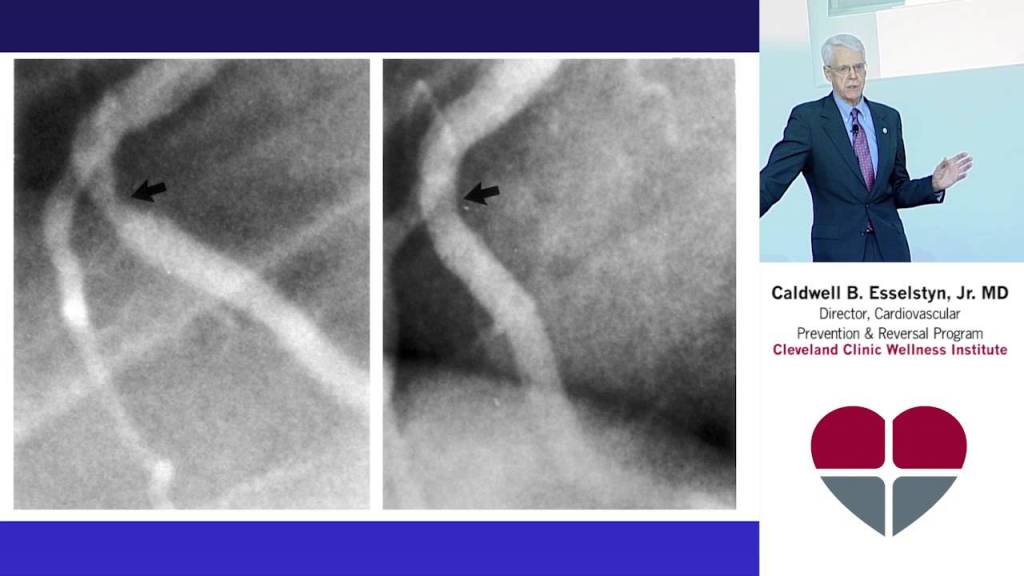
    • Excellent angiograms: Patients’ angiograms showed a widening of the coronary arteries — a reversal of heart disease.
  • Dietary Recommendations: Dr. Esselstyn promotes a diet rich in:
    • Fruits
    • Vegetables
    • Whole grains
    • Legumes (beans, lentils)
    • Seeds and nuts

Reversal of Coronary Disease (from the study)

Here’s a famous photo from his study that shows the reversal of coronary heart disease in one of his patients who adopted a whole plant-based diet to address their heart disease.

The Esselstyn Heart Disease Program

Created by Dr. Caldwell Esselstyn, focuses on reversing and preventing heart disease through a whole plant-based diet. Here’s a breakdown of its key aspects:

Dietary Core:

  • Focus: Eliminates all animal products and processed oils.
  • Foundation: Emphasizes whole, unprocessed plant foods listed earlier.

Goals:

  • Reduce dietary fat intake, particularly saturated fat and cholesterol.
  • Promote weight management and a healthy lifestyle.
  • Improve overall cardiovascular health.

Program Features (may vary):

  • Educational Component: Participants learn about the connection between diet and heart disease, along with the science behind the plant-based approach.
  • Dietary Guidance: Receive guidance on creating and maintaining a heart-healthy, plant-based diet.
  • Lifestyle Modifications: May include recommendations for exercise, stress management, and sleep hygiene.

Potential Benefits (based on Dr. Esselstyn’s research):

  • Reduction in angina and chest pain
  • Regression of existing arterial plaque buildup
  • Improved blood flow through coronary arteries

Dr. Esselstyn’s recipes and resources

Dr. Esselstyn advocates for a whole plant-based diet to prevent and reverse heart disease. Here are some resources for finding Dr. Esselstyn’s vegan recipes:

Cookbooks:

  • Dr. Esselstyn’s primary resource is his cookbook: “Prevent and Reverse Heart Disease: The Power of Plant-Based Eating” (https://amzn.to/3xJU9cf). This book includes over 125 plant-based recipes that follow his dietary recommendations.

Websites:

Recipe Ideas:

Here are some general recipe ideas that align with Dr. Esselstyn’s recommendations:

  • Breakfast: Oatmeal with fruit and nuts, whole-wheat toast with avocado and tomato, smoothie with plant-based milk, berries, and spinach.
  • Lunch: Lentil soup with whole-wheat bread, quinoa salad with vegetables and beans, stir-fry with tofu or tempeh and vegetables.
  • Dinner: Veggie burgers on whole-wheat buns, lentil pasta with marinara sauce and vegetables, baked sweet potato with black beans and salsa.
  • Snacks: Fruits and vegetables, air-popped popcorn, hummus with whole-wheat pita bread, nuts, and seeds (in moderation).


Dear reader, If you wish to make a small donation so I can improve this blog and add more value, I would be very obliged. thanks!

One-Time
Monthly
Yearly

Make a one-time donation

Make a monthly donation

Make a yearly donation

Choose an amount

C$5.00
C$15.00
C$100.00
C$5.00
C$15.00
C$100.00
C$5.00
C$15.00
C$100.00

Or enter a custom amount

C$

Your contribution is appreciated.

Your contribution is appreciated.

Your contribution is appreciated.

DonateDonate monthlyDonate yearly

Interested in Instant Pot for ease of cooking? Here’s a shortcut link:

https://amzn.to/4bPpTLF

Replacement omega 3 pills for vegans:

https://amzn.to/3Vvpw3m

Amazon e-Gift cards:

https://amzn.to/3yMcENn

B12 Supplements for vegans:

https://amzn.to/4aRcguj