
Category: Health and Nutrition

Joaquin Phoenix’s journey into veganism [Blog #14]

Joaquin Phoenix’s journey into veganism is a powerful story of compassion, environmental awareness, and personal conviction.

Joaquin Phoenix, known for his roles in films like “Walk the Line” and “Joker,” has made a significant impact in the entertainment industry and as a passionate advocate for animal rights. His journey towards veganism started at a young age, and his commitment to the cause has only grown stronger over the years.

Phoenix’s vegan journey began when he was just three years old. While traveling with his family on a cargo ship from Venezuela to Miami, he and his siblings witnessed fish being “killed brutally.” This experience left a lasting impression on the young actor, and he decided to stop eating meat. In a 2018 interview with Collider, Phoenix recalled the event that led him to veganism: “Really it was seeing these fish being killed when I was on a boat as a kid. I guess to stun them they were throwing them against the side of the boat. It wasn’t just me, it was my siblings, all of my siblings, except for the youngest, Summer, she wasn’t born. I just thought it was such a gross abuse of power in a way.”

Since then, Phoenix has been a vocal advocate for animal rights and veganism. He has narrated the 2005 documentary “Earthlings,” which has been credited with helping many people make the move to veganism. He has also been involved with Mercy For Animals, an organization that works to prevent cruelty to farmed animals.

Phoenix’s commitment to veganism extends beyond his personal life. He has used his platform to raise awareness about the treatment of animals in the food industry. In his 2020 Oscars acceptance speech, he spoke about the cruelty of the dairy industry and encouraged people to consider the impact of their food choices on animals and the environment.

Joaquin Phoenix’s Oscar speech condemning the dairy industry was as follows:

“We go to the natural world and we plunder it for its resources. We feel entitled to artificially inseminate a cow and when she gives birth, we steal her baby, even though her cries of anguish are unmistakable. And then we take her milk that’s intended for her calf and we put it in our coffee and our cereal. And I think we fear the idea of personal change because we think we need to sacrifice something; to give something up. But human beings at our best are so creative and inventive, and we can create, develop, and implement systems of change that are beneficial to all sentient beings and the environment. I have been a scoundrel all my life, I’ve been selfish. I’ve been cruel at times, and hard to work with, and I’m grateful that so many of you in this room have given me a second chance. And I think that’s when we’re at our best: when we support each other. Not when we cancel each other out for our past mistakes, but when we help each other to grow. When we educate each other; when we guide each other toward redemption. That is the best of humanity.”

He also played a significant role in ensuring that the entire menu of the 2020 Golden Globes was plant-based.

In addition to his advocacy work, Phoenix has also been recognized for his contributions to the vegan community. He was featured in the summer 2016 edition of Compassionate Living magazine and was the narrator of the documentary “The Animal People.” He is also an executive producer of “What the Health,” a documentary about the impact of animal products on human health.

Phoenix’s dedication to veganism and animal rights has not gone unnoticed. In 2021, the Los Angeles Animal Save released a documentary called “INDIGO” featuring Phoenix and his rescue of a dairy cow and her calf from a slaughterhouse. The documentary highlights Phoenix’s commitment to ending animal suffering and his belief in the power of compassion.

Joaquin Phoenix’s journey to veganism is a testament to the power of personal experience and the impact that one person can have on the world. His advocacy work has inspired many to consider the ethical implications of their food choices and to make more compassionate decisions. As he once said, “It takes nothing away from a human to be kind to an animal.”


Dear reader, If you wish to make a small donation so I can improve this blog and add more value, I would be very obliged. thanks!

One-Time
Monthly
Yearly

Make a one-time donation

Make a monthly donation

Make a yearly donation

Choose an amount

C$5.00
C$15.00
C$100.00
C$5.00
C$15.00
C$100.00
C$5.00
C$15.00
C$100.00

Or enter a custom amount

C$

Your contribution is appreciated.

Your contribution is appreciated.

Your contribution is appreciated.

DonateDonate monthlyDonate yearly

Interested in Instant Pot for ease of cooking? Here’s a shortcut link:

https://amzn.to/4bPpTLF

Replacement omega 3 pills for vegans:

https://amzn.to/3Vvpw3m

Amazon e-Gift cards:

https://amzn.to/3yMcENn

B12 Supplements for vegans:

https://amzn.to/4aRcguj
Vegan food sources for essential nutrients [Blog #13]

Looking for a quick reference to alternative food sources (vegan) that meet the key daily nutrient requirements for the human body?

This table lists how you can obtain essential nutrients from vegan food sources.

NutrientVegan Food Sources
Protein– Legumes (beans, lentils, peas)
– Nuts and seeds
– Tofu, tempeh
– Seitan
– Whole grains
Iron– Legumes
– Nuts and seeds
– Tofu, tempeh
– Dark leafy greens (spinach, kale)
– Dried fruits
Calcium– Fortified plant milks (almond, soy, rice)
– Tofu (made with calcium sulfate)
– Dark leafy greens
– Broccoli
– Almonds
Omega-3 Fatty Acids– Flaxseeds, chia seeds
– Walnuts
– Hemp seeds
– Algae-based supplements
Vitamin B12– Fortified foods (plant milks, cereals, nutritional yeast)
– Meat substitutes
– Tempeh
Vitamin D– Sunlight exposure
– Fortified foods (plant milks, cereals)
– Mushrooms (UV-exposed)
Zinc– Legumes
– Nuts and seeds
– Whole grains
– Tofu, tempeh
Iodine– Seaweed
– Iodized salt
Selenium– Brazil nuts
– Whole grains
– Legumes
Magnesium– Whole grains
– Dark leafy greens
– Nuts and seeds
– Legumes
Potassium– Bananas
– Sweet potatoes
– Legumes
– Nuts and seeds
Folate– Dark leafy greens
– Legumes
– Asparagus
– Avocado

Please note: This table is not an exhaustive list and planning is required to ensure a well-balanced vegan diet. Consulting a registered dietitian can help create a personalized plan to meet any specific needs.

Additional Considerations:

  • Non-vegan sources may be higher in certain nutrients but often have saturated fat and cholesterol.
  • Vegan sources may require consuming a wider variety of foods to meet daily needs.
  • Proper food preparation techniques can enhance nutrient absorption in plant-based foods (e.g., pairing iron with vitamin C for better absorption).


Dear reader, If you wish to make a small donation so I can improve this blog and add more value, I would be very obliged. thanks!

One-Time
Monthly
Yearly

Make a one-time donation

Make a monthly donation

Make a yearly donation

Choose an amount

C$5.00
C$15.00
C$100.00
C$5.00
C$15.00
C$100.00
C$5.00
C$15.00
C$100.00

Or enter a custom amount

C$

Your contribution is appreciated.

Your contribution is appreciated.

Your contribution is appreciated.

DonateDonate monthlyDonate yearly

Interested in Instant Pot for ease of cooking? Here’s a shortcut link:

https://amzn.to/4bPpTLF

Replacement omega 3 pills for vegans:

https://amzn.to/3Vvpw3m

Amazon e-Gift cards:

https://amzn.to/3yMcENn

B12 Supplements for vegans:

https://amzn.to/4aRcguj

Dr. Caldwell Esselstyn: Whole Plant-based Diet for Heart Disease Reversal [Blog #12]

Are you suffering from heart disease or know a loved one who is? The information in this blog should assure you that heart disease is not a fate you need to live with for the rest of your life. You can reverse it and take back control of your health. Dr. Caldwell Esselstyn has made it his life’s work to facilitate just that. You owe it to yourself to look at his program and recommendations. This blog is dedicated to his work, the studies, the findings, and the heart program he has created for those suffering from heart disease.

Here’s a summary of his work:

Dr. Caldwell Esselstyn is a physician who has researched the potential for reversing heart disease through a whole plant-based diet.

  • Focus: Dr. Esselstyn’s primary focus is on the role of dietary fat, particularly saturated fat and cholesterol, in the progression of coronary artery disease (CAD).
  • Research: He conducted a small but impactful study involving patients with severe CAD. These patients were placed on a low-fat, whole plant-based diet with no animal products or processed oils.
  • Overall Results: The study showed promising results. Many patients experienced:
    • Reduced symptoms like chest pain and angina
    • Improved overall cardiovascular health
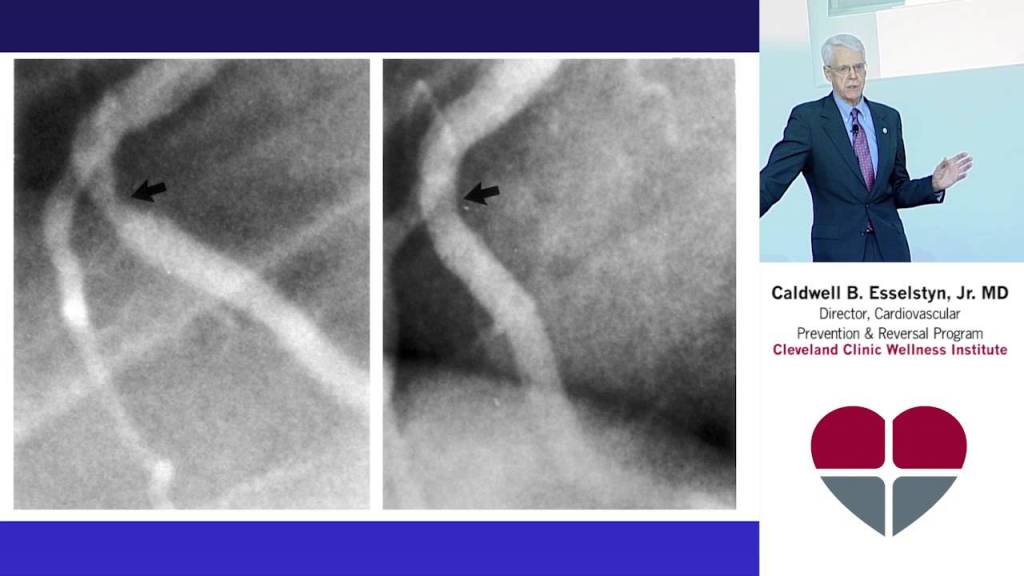
    • Regression of Plaque: Angiograms, a medical imaging technique, on some patients, revealed a reduction in existing arterial plaque after following the plant-based diet for several months.
    • Improved Blood Flow: The study also indicated improvements in blood flow through the coronary arteries.
  • Specific Results: 5 of the 24 patients in Dr. Esselstyn’s initial study were told by cardiologists that they had less than a year to live. Yet, 12+ years later after following the Esselstyn Program, they survived symptom-free.
    • Symptoms diminished (and often disappeared) within 8 to 12 weeks of starting the program. Within months, these dramatic changes occurred:
    • Cholesterol lowered: Patients’ average total cholesterol levels dropped from 246 mg/dL to 137 mg/dL.
    • No cardiac events: Before the study, the patients had 49 cardiac events (coronary bypass surgery, angioplasties, etc.). None of the patients who adhered to the eating plan experienced a cardiac event within 12 years of follow-up.
    • Excellent angiograms: Patients’ angiograms showed a widening of the coronary arteries — a reversal of heart disease.
  • Dietary Recommendations: Dr. Esselstyn promotes a diet rich in:
    • Fruits
    • Vegetables
    • Whole grains
    • Legumes (beans, lentils)
    • Seeds and nuts

Reversal of Coronary Disease (from the study)

Here’s a famous photo from his study that shows the reversal of coronary heart disease in one of his patients who adopted a whole plant-based diet to address their heart disease.

The Esselstyn Heart Disease Program

Created by Dr. Caldwell Esselstyn, focuses on reversing and preventing heart disease through a whole plant-based diet. Here’s a breakdown of its key aspects:

Dietary Core:

  • Focus: Eliminates all animal products and processed oils.
  • Foundation: Emphasizes whole, unprocessed plant foods listed earlier.

Goals:

  • Reduce dietary fat intake, particularly saturated fat and cholesterol.
  • Promote weight management and a healthy lifestyle.
  • Improve overall cardiovascular health.

Program Features (may vary):

  • Educational Component: Participants learn about the connection between diet and heart disease, along with the science behind the plant-based approach.
  • Dietary Guidance: Receive guidance on creating and maintaining a heart-healthy, plant-based diet.
  • Lifestyle Modifications: May include recommendations for exercise, stress management, and sleep hygiene.

Potential Benefits (based on Dr. Esselstyn’s research):

  • Reduction in angina and chest pain
  • Regression of existing arterial plaque buildup
  • Improved blood flow through coronary arteries

Dr. Esselstyn’s recipes and resources

Dr. Esselstyn advocates for a whole plant-based diet to prevent and reverse heart disease. Here are some resources for finding Dr. Esselstyn’s vegan recipes:

Cookbooks:

  • Dr. Esselstyn’s primary resource is his cookbook: “Prevent and Reverse Heart Disease: The Power of Plant-Based Eating” (https://amzn.to/3xJU9cf). This book includes over 125 plant-based recipes that follow his dietary recommendations.

Websites:

Recipe Ideas:

Here are some general recipe ideas that align with Dr. Esselstyn’s recommendations:

  • Breakfast: Oatmeal with fruit and nuts, whole-wheat toast with avocado and tomato, smoothie with plant-based milk, berries, and spinach.
  • Lunch: Lentil soup with whole-wheat bread, quinoa salad with vegetables and beans, stir-fry with tofu or tempeh and vegetables.
  • Dinner: Veggie burgers on whole-wheat buns, lentil pasta with marinara sauce and vegetables, baked sweet potato with black beans and salsa.
  • Snacks: Fruits and vegetables, air-popped popcorn, hummus with whole-wheat pita bread, nuts, and seeds (in moderation).


Dear reader, If you wish to make a small donation so I can improve this blog and add more value, I would be very obliged. thanks!

One-Time
Monthly
Yearly

Make a one-time donation

Make a monthly donation

Make a yearly donation

Choose an amount

C$5.00
C$15.00
C$100.00
C$5.00
C$15.00
C$100.00
C$5.00
C$15.00
C$100.00

Or enter a custom amount

C$

Your contribution is appreciated.

Your contribution is appreciated.

Your contribution is appreciated.

DonateDonate monthlyDonate yearly

Interested in Instant Pot for ease of cooking? Here’s a shortcut link:

https://amzn.to/4bPpTLF

Replacement omega 3 pills for vegans:

https://amzn.to/3Vvpw3m

Amazon e-Gift cards:

https://amzn.to/3yMcENn

B12 Supplements for vegans:

https://amzn.to/4aRcguj
20 Vegan Celebrities and Their Plant-Based Journeys [Blog #11]

Natalie Portman’s story of veganism is one of evolution and a growing awareness of the impact of our choices. Here’s how her journey unfolded:

  • Early Start: At just nine years old, Portman witnessed a disturbing medical procedure performed on a chicken. This experience sparked a lifelong commitment to vegetarianism, a significant step towards a plant-based lifestyle.
  • A Book as a Catalyst: Years later, in 2011, after reading the book “Eating Animals” by Jonathan Safran Foer, Portman decided to take the next step and become vegan. The book explores the ethical and environmental implications of animal agriculture, resonating deeply with her existing values.
  • Compassion and Sustainability: Portman’s veganism is driven by both compassion for animals and environmental concerns. Factory farming practices have a significant ecological impact, and veganism allows her to reduce her environmental footprint.
  • Beyond Diet: Portman’s commitment extends beyond just food choices. She is known for her ethical fashion choices, opting for cruelty-free clothing and accessories. This holistic approach reflects her dedication to a cruelty-free lifestyle.
  • Using Her Platform: As a renowned actress, Portman uses her influence to promote veganism. She has narrated and produced the documentary “Eating Animals,” a film that sheds light on the realities of animal agriculture. Additionally, she champions vegan businesses and inspires others to explore plant-based living.

Natalie Portman’s journey resonates because it reflects a thoughtful and informed transition. She is not just a celebrity following a fad, but a passionate advocate who inspires others to consider the ethical and environmental implications of their choices. Her story highlights the accessibility of veganism, showing that it can be a fulfilling way to live for people from all walks of life.

If Natalie’s story inspired you, here are 20 celebrities including Natalie who are vegan, along with an approximate timeframe of how long they’ve been following a plant-based diet:

  1. Joaquin Phoenix (45+ years): One of the longest-term vegans on this list, Joaquin Phoenix has been vocal about his veganism since childhood.
  2. Woody Harrelson (30+ years): A strong advocate for environmental and animal rights, Woody Harrelson is known for influencing those around him to go vegan as well.
  3. Mayim Bialik (Since childhood): Actress Mayim Bialik has been vegan for most of her life and raised her sons on a plant-based diet.
  4. Natalie Portman (15+ years): A longtime vegan, Natalie Portman is known for her ethical choices in fashion and lifestyle.
  5. Lizzo (4 years): After following a vegetarian diet for many years, singer Lizzo transitioned to veganism in 2020.
  6. Lewis Hamilton (5+ years): Formula One champion Lewis Hamilton credits his plant-based diet for his peak physical performance and environmental concerns.
  7. Venus Williams (10+ years): Tennis legend Venus Williams credits her vegan diet for her longevity and overall health in the sport.
  8. Ellen Pompeo (15+ years): Actress Ellen Pompeo credits her plant-based lifestyle for her energy levels and overall health.
  9. Keadilan Bryant (6 years): Baseball player Keadilan Bryant went vegan after watching a documentary about animal agriculture and credits it for his improved athletic performance.
  10. Sia (Many years): A vocal advocate for animal rights, singer Sia has been vegan for a significant amount of time.
  11. Ricky Gervais (Many years): Comedian Ricky Gervais is a strong advocate for animal rights and has been vegan for a long time.
  12. Al Gore (10+ years): Former Vice President Al Gore believes a plant-based diet is crucial for environmental sustainability.
  13. Olivia Wilde (Several years): Actress Olivia Wilde has spoken about the health benefits she’s experienced since adopting a plant-based diet.
  14. Jillian Michaels (Mostly vegan): Celebrity fitness trainer Jillian Michaels promotes a healthy lifestyle that incorporates a mostly plant-based diet.
  15. Billie Eilish (10 years): Pop star Billie Eilish cites animal welfare and environmental concerns as her reasons for going vegan at a young age.
  16. Liam Hemsworth (Several years): Actor Liam Hemsworth reportedly adopted a plant-based diet after working with Woody Harrelson.
  17. Ariana Grande (10 years): Pop singer Ariana Grande is a passionate animal lover who has been vegan since 2013.
  18. Travis Barker (6 years): Blink-182 drummer Travis Barker credits his vegan diet for his recovery and improved health after a health scare.
  19. Casey Affleck (Over a decade): Actor Casey Affleck is a strong advocate for animal rights and has been vegan for over ten years.
  20. Thandiwe Newton (Over a decade): Actress Thandiwe Newton is a vegan who believes plant-based eating is a better choice for the planet.


Dear reader, If you wish to make a small donation so I can improve this blog and add more value, I would be very obliged. thanks!

One-Time
Monthly
Yearly

Make a one-time donation

Make a monthly donation

Make a yearly donation

Choose an amount

C$5.00
C$15.00
C$100.00
C$5.00
C$15.00
C$100.00
C$5.00
C$15.00
C$100.00

Or enter a custom amount

C$

Your contribution is appreciated.

Your contribution is appreciated.

Your contribution is appreciated.

DonateDonate monthlyDonate yearly

Interested in Instant Pot for ease of cooking? Here’s a shortcut link:

https://amzn.to/4bPpTLF

Replacement omega 3 pills for vegans:

https://amzn.to/3Vvpw3m

Amazon e-Gift cards:

https://amzn.to/3yMcENn

B12 Supplements for vegans:

https://amzn.to/4aRcguj

‘How Not to Die’ by Dr. Michael Greger: Evidence-Based Health and Nutrition [Blog #10]

I have found Dr. Michael Greger to be an excellent source of information for a healthy lifestyle backed by Science. Dr. Greger provides practical and evidence-based arguments to help steer us to health and longevity.

Why do I find Dr. Michael Greger compelling? His books, particularly ‘How Not to Die’ might not be laugh-out-loud funny in the traditional sense. However, they incorporate humor in a few ways that make them engaging and approachable:

The Absurdity of Some Research: Let’s face it, some scientific studies can be downright strange. Dr. Greger might highlight the humorous aspects of these studies to make a point without diminishing the underlying research.

Lighthearted Tone: Dr. Greger avoids dry scientific jargon and uses a conversational style. He injects wit and humor to keep the reader interested in potentially complex topics about nutrition and health.

Playful Use of Language: He might use puns, unexpected comparisons, or funny food names to make scientific concepts more relatable.

Self-deprecating Humor: Dr. Greger doesn’t shy away from poking fun at himself or the limitations of certain studies. This lightness adds a personal touch and makes the information more digestible.

It’s important to remember that the primary focus of Dr. Greger’s books is to provide evidence-based information on healthy eating and preventing disease.

‘How Not to Die’ argues that a plant-based diet with specific lifestyle changes can significantly reduce your risk of chronic diseases. While I urge you to read the book to derive the most value from it, here are some key takeaways:

  • Focus on whole plant-based foods: Fruits, vegetables, whole grains, legumes, nuts, and seeds are the foundation of a healthy diet. These foods are packed with fiber, vitamins, minerals, and antioxidants that can help prevent various diseases.
  • Dietary tweaks for specific health concerns: Dr. Greger recommends specific plant-based foods for different health problems. For instance, flaxseeds are used to lower blood pressure, and cruciferous vegetables like broccoli for cancer prevention.
  • Prioritize exercise: Regular physical activity is crucial for overall health. Aim for at least 90 minutes of moderate or 40 minutes of vigorous exercise weekly.
  • Limit processed foods: Processed foods are often loaded with unhealthy fats, sodium, and added sugars, which can contribute to chronic diseases.
  • Dietary swaps for a healthier you: Dr. Greger suggests replacing unhealthy fats with healthy options like those in nuts and avocados. Similarly, limit red meat and processed meats, and focus on getting enough potassium and fiber from plant sources.
  • Lifestyle habits matter: Don’t smoke, manage stress, and get enough sleep. These habits and a healthy diet and exercise can significantly impact your health.

It’s important to note that he backs his claims with numerous scientific studies which you can explore on his website, NutritionFacts.org.

One example of a popular scientific study Dr. Michael Greger might discuss on NutritionFacts.org is the Harvard Health Professionals Follow-up Study and the Harvard Nurses’ Health Study. This long-term study followed tens of thousands of healthcare professionals over several decades and found a link between red meat consumption and increased risk of chronic diseases like heart disease, cancer, and overall mortality.

Dr. Greger emphasizes using well-regarded, peer-reviewed studies to support his claims about the benefits of a plant-based diet. The Harvard studies mentioned above are a good example because they are large, long-term studies with a strong reputation in the scientific community.

Dr. Michael Greger utilizes a multi-pronged approach to educate the public about nutrition and health:

  • Books: His flagship book, ‘How Not to Die’, summarizes the power of a plant-based diet in preventing chronic diseases. It uses an engaging writing style to present complex information clearly and sometimes humorously. At the time of writing this blog, he published a new book called ‘How Not to Age’.
  • NutritionFacts.org: This free, non-profit website offers a treasure trove of resources. Easy-to-understand videos, articles, and podcasts delve into various aspects of nutrition, all backed by scientific research. Dr. Greger highlights the latest studies and their implications for a healthy diet.
  • The Daily Dozen: This unique checklist on NutritionFacts.org encourages a well-rounded plant-based diet. It categorizes twelve essential plant-based food groups to include in your daily intake.
  • Social Media: Dr. Greger is active on social media platforms, sharing snippets of his research and insights on healthy eating habits. This allows him to connect with a wider audience and spark conversations about nutrition.
  • Lectures and Presentations: Dr. Greger frequently delivers lectures and presentations to the public and medical professionals. This allows him to directly engage with audiences and spread his message about the power of evidence-based nutrition.

I listen to and swear by Dr. Greger’s knowledge and wholeheartedly recommend you follow him on social media and read his books.


Dear reader, If you wish to make a small donation so I can improve this blog and add more value, I would be very obliged. thanks!

One-Time
Monthly
Yearly

Make a one-time donation

Make a monthly donation

Make a yearly donation

Choose an amount

C$5.00
C$15.00
C$100.00
C$5.00
C$15.00
C$100.00
C$5.00
C$15.00
C$100.00

Or enter a custom amount

C$

Your contribution is appreciated.

Your contribution is appreciated.

Your contribution is appreciated.

DonateDonate monthlyDonate yearly

Interested in Instant Pot for ease of cooking? Here’s a shortcut link:

https://amzn.to/4bPpTLF

Replacement omega 3 pills for vegans:

https://amzn.to/3Vvpw3m

Amazon e-Gift cards:

https://amzn.to/3yMcENn

B12 Supplements for vegans:

https://amzn.to/4aRcguj

Plant-Based Diet and Athletic Excellence: Athletes Who Break Stereotypes [Blog #9]

If there was a doubt that a vegan diet was suited for top-performance athletes, here’s a list of some worldwide famous vegan athletes and their sports:

Endurance Athletes:

  • Scott Jurek (Ultramarathon runner): He holds numerous records in ultramarathon running, including winning the Spartathlon in Greece three consecutive times (153 miles).
  • Fiona Oakes (Marathon runner): Holds the world record for the fastest marathon time by a vegan woman over 50 years old.
  • Rich Roll (Ultramarathon runner, Cyclist): An inspiring figure who transitioned to a plant-based diet and achieved a high level of success in various endurance sports.

Combat Sports:

  • Venus Williams (Tennis): Venus Williams is a tennis legend with seven Grand Slam singles titles. Venus Williams credits her plant-based diet for her continued success.
  • Novak Djokovic (Tennis): World No. 1 tennis player for many years, Novak Djokovic credits his plant-based diet for his peak performance.
  • Patrik Baboumian (Strongman): A dominant force in strongman competitions, Patrik Baboumian is known for his dedication to plant-based power.

Team Sports:

  • Lewis Hamilton (Formula 1 Driver): A multiple Formula 1 World Champion, Lewis Hamilton is a vocal advocate for a plant-based lifestyle.
  • Chris Smalling (Soccer Player): Premier League defender known for his athleticism and commitment to a vegan diet.
  • Alex Morgan (Soccer Player): US Women’s National Soccer Team star who credits a plant-based diet for her fitness and performance.

Other Sports:

  • Tia Blanco (Surfer): A professional surfer known for her dedication to environmental causes and a plant-based lifestyle.
  • Dotsie Bausch (Roller Derby): A multiple Roller Derby World Champion who attributes her athleticism to her plant-based diet.

This is just a small sampling of the many talented vegan athletes across various sports. Remember, a plant-based diet can fuel top athletic performance at all levels! So, if you doubt that you cannot be an elite athlete on plant-based food, you may want to research these outliers above.


Dear reader, If you wish to make a small donation so I can improve this blog and add more value, I would be very obliged. thanks!

One-Time
Monthly
Yearly

Make a one-time donation

Make a monthly donation

Make a yearly donation

Choose an amount

C$5.00
C$15.00
C$100.00
C$5.00
C$15.00
C$100.00
C$5.00
C$15.00
C$100.00

Or enter a custom amount

C$

Your contribution is appreciated.

Your contribution is appreciated.

Your contribution is appreciated.

DonateDonate monthlyDonate yearly

Interested in Instant Pot for ease of cooking? Here’s a shortcut link:

https://amzn.to/4bPpTLF

Replacement omega 3 pills for vegans:

https://amzn.to/3Vvpw3m

Amazon e-Gift cards:

https://amzn.to/3yMcENn

B12 Supplements for vegans:

https://amzn.to/4aRcguj

Vegan Infotainment: Engaging Documentaries for Plant-Based Beginners [Blog #8]

Thinking about joining the plant-based revolution but need a little infotainment to get you started? Look no further than this list of documentaries! I have got everything from laugh-out-loud science to emotional gut-punches (with a side of delicious vegan recipe inspiration).

1. Forks Over Knives: When Doctors Tell Steak to Moo-ve Over

  • The Lowdown: This documentary is basically a giant science experiment proving a plant-based diet is the ultimate BFF for your body. Watch it, and you might just find yourself craving a salad taller than your indecisiveness at a buffet.

2. Cowspiracy: Udder Chaos in the Meat Industry

  • The Moo-vie Pitch: Forget boring environmental documentaries! This film exposes the shocking environmental impact of animal agriculture, all while making you wonder if your leather jacket is judging you for the Amazon rainforest.

3. What the Health: Investigating the Not-So-Healthy Truth (Spoiler: It’s Not the Tofu)

  • The Diagnosis: Get ready for some hard-hitting investigative journalism that’ll make you question everything on your plate. This documentary pulls back the curtain on the not-so-rosy relationship between animal products and your insides. You might start looking at that hot dog shaped like a question mark with suspicion.

4. Dominion: Factory Farming Exposed (Not Your Typical Action Hero)

  • The Mission: This film throws on its metaphorical night-vision goggles to expose the realities of factory farming. Warning: Might not be for the faint of heart (or stomach), but knowledge is power! This could empower you to choose a plant-based protein that kicks butt… ethically.

5. Earthlings: A Tearjerker with a Happy Ending (Seriously)

  • The Feels Trip: Grab your tissues for this emotional rollercoaster. This documentary might have you reaching for the tissues, but don’t worry, it also highlights the beauty of compassion and the joys of a vegan lifestyle. Think of it as a warm hug (and maybe a comforting bowl of vegan chili) for your soul.

6. Vegan: Ethical & Delicious (For the Foodies Out There)

  • The Feast: Calling all food lovers! This documentary is a celebration of all things plant-based, showcasing the creativity, diversity, and sheer deliciousness of vegan cuisine. You might just forget cheese fries ever existed after watching this.

7. Grist: The Future of Food (A Hopeful Look Ahead)

  • The Vision: Feeling overwhelmed by all the environmental stuff? This documentary offers a more optimistic outlook, exploring innovative solutions and sustainable practices for the future of food. It’ll leave you feeling hopeful and ready to be a part of the change!

8. Food Inc.: How Our Food System Got So Gross (A Reality Check)

  • The Gross-Out: This documentary takes a critical look at the industrial food system, from factory farms to grocery store shelves. It’s not always pretty, but knowledge is power, and this might just inspire you to take control of what you put on your plate.

9. Okja: A Heartwarming Tale of Friendship (with a Vegan Twist)

  • The Tearjerker (But Cute!): Okay, this isn’t strictly a documentary, but it’s a heartwarming film about a young girl and her genetically modified “super pig” best friend. It’ll make you question our relationship with animals and might leave you craving a snuggle with your own furry (or feathered) friend.

10. Vegucated: Three Meat-Eaters Try Vegan (A Hilarious Experiment)

  • The Laugh Riot: This lighthearted documentary follows three friends who challenge themselves to go vegan for six weeks. Get ready for hilarious mishaps, surprising discoveries, and maybe even a newfound appreciation for a good vegan brownie.

So there you have it! From laugh-out-loud science to thought-provoking exposés, there’s a vegan documentary for everyone. It will get you to question what our society incentivizes and consider alternatives. My journey of metamorphosis began with the movie – ‘What the Health’. It inspired me to do research and question my lifestyle choices in depth.

Now, grab some popcorn (air-popped, of course!), gather your friends, and get ready to be inspired!


Dear reader, If you wish to make a small donation so I can improve this blog and add more value, I would be very obliged. thanks!

One-Time
Monthly
Yearly

Make a one-time donation

Make a monthly donation

Make a yearly donation

Choose an amount

C$5.00
C$15.00
C$100.00
C$5.00
C$15.00
C$100.00
C$5.00
C$15.00
C$100.00

Or enter a custom amount

C$

Your contribution is appreciated.

Your contribution is appreciated.

Your contribution is appreciated.

DonateDonate monthlyDonate yearly

Interested in Instant Pot for ease of cooking? Here’s a shortcut link:

https://amzn.to/4bPpTLF

Replacement omega 3 pills for vegans:

https://amzn.to/3Vvpw3m

Amazon e-Gift cards:

https://amzn.to/3yMcENn

B12 Supplements for vegans:

https://amzn.to/4aRcguj

“Vegans only eat salad!” [Blog #7]

Oh, the drama of dietary choices! Vegans, those brave souls who dare to live life on the edge… of the produce aisle. They’re the ones who’ve taken a stand against the societal FUD (Fear, Uncertainty, and Doubt) that surrounds their leafy lifestyle.

But let’s face it, humans are masters of self-justification. We’ll come up with the most creative excuses to avoid changing our habits, especially if it means giving up our beloved bacon. It’s like we’re in a never-ending game of “my diet is better than yours,” where the stakes are high and the arguments are… well, let’s just say they’re not always based on facts.

Some of the arguments are laughable! So, let’s dive into these myths about veganism and see if they make you chuckle or roll your eyes:

Myth 1: Vegans Only Eat Salad

Yes, because nothing screams “I’m a vegan” more than a plate full of lettuce and a side of air. But seriously, have you tried vegan lasagna? It’s like a hug for your taste buds.

Myth 2: Vegans Are Protein Deficient

Sure because plants don’t contain protein. I mean, who needs beans, lentils, tofu, seitan, tempeh, and nuts when you can just eat a steak?

Myth 3: Veganism Is Expensive

Yes, because nothing says “affordable” like a $50 steak dinner. Meanwhile, a bag of lentils costs $2 and can feed a family of four for a week.

Myth 4: Vegans Are Weak and Frail

Tell that to Patrik Baboumian, a vegan strongman who can lift a car with one hand while eating a tofu scramble with the other. Try googling Vegan Athletes, you will be surprised.

Myth 5: Veganism Is Just a Trend

Yes, because caring about the environment, animal welfare, and your health is totally a fad.

Myth 6: Vegan Food Is Boring

Yes, because nothing says “excitement” like eating the same meat and potatoes every day. Meanwhile, vegans are over here exploring the culinary wonders of the plant kingdom.

Myth 7: Veganism Is Just a Diet

Yes, because ethical principles and compassion for all living beings are totally just a weight loss fad.

Myth 8: Vegans Are Preachy and Judgmental

Yes, because pointing out the flaws in the current food system and advocating for a more sustainable, compassionate future is totally the same as being a judgmental jerk.

Myth 9: Veganism Is Only for White People

Because people of color don’t care about the environment, animal welfare, or their health.

Myth 10: Veganism Is a Sacrifice

Yes, because giving up animal products is totally a sacrifice, not a choice to live a more compassionate, sustainable, and healthy life.

These myths are as funny as they are unfounded. So, let’s all have a good laugh and then go enjoy some delicious vegan food.


Dear reader, If you wish to make a small donation so I can improve this blog and add more value, I would be very obliged. thanks!

One-Time
Monthly
Yearly

Make a one-time donation

Make a monthly donation

Make a yearly donation

Choose an amount

C$5.00
C$15.00
C$100.00
C$5.00
C$15.00
C$100.00
C$5.00
C$15.00
C$100.00

Or enter a custom amount

C$

Your contribution is appreciated.

Your contribution is appreciated.

Your contribution is appreciated.

DonateDonate monthlyDonate yearly

Interested in Instant Pot for ease of cooking? Here’s a shortcut link:

https://amzn.to/4bPpTLF

Replacement omega 3 pills for vegans:

https://amzn.to/3Vvpw3m

Amazon e-Gift cards:

https://amzn.to/3yMcENn

B12 Supplements for vegans:

https://amzn.to/4aRcguj

Understanding Veganism: Animal Cruelty and Spiritual Reflection [Blog #5]

Are ham and bacon worth the cruelty imposed on these innocent creatures! I am not judging as I was also among the consumers of animal meat for many years. In my personal journey, I went vegan primarily for health reasons. My goal was to disrupt the destructive path I was on toward chronic disease, illness, and medication. Little did I know that by going vegan, I would become educated about other just as critical reasons for doing so.

I had no idea about the animal cruelty being imposed across factory farms globally. Economic profit and efficiency are prioritized over animal welfare in these factories. Animals are housed in extremely cramped cages or areas with very little to no physical freedom. Animal parents and their calves are segregated leading to psychological turmoil. They are poked and prodded literally. They are fed steroids leading to quick and unnatural growth. They live in their own feces and filth and are devoid of dignity. The animals are debeaked, castrated, and tail-docked without pain management to prevent injuries in crowded conditions.

Sure, there may be exceptions in such practices, but what kind of life do these animals endure? If one looks at these animals as just meat, is there a place for empathy for their dignity, emotions, and pain? Ever wonder why such cruelty is not common knowledge? It doesn’t make the daily local breaking news segments. Why is that? Perhaps as a species, we are ashamed of our shortcomings in values especially when these shortcomings are directed toward a species other than ours. Perhaps we are just ignorant. We justify that human beings are the superior species on earth. If animals are being raised and bred to serve as our food, why should we give them a second thought? Can we be so narrow-minded or selfish?

This is a core concern for many vegans. They object to the way animals are raised and slaughtered for food and choose a vegan diet to avoid contributing to this practice. Given that the world is run on economics we can use the key principle of supply and demand. By going vegan, we directly impact the demand for meat and therefore the need for animal farming.

When I realized the full impact of my decision to go vegan and that it had other surprising benefits, I became elated. It felt good to not be part of a human practice that harms animals. This resonated with me at a deep spiritual level. Why would these other creatures be placed on Earth? It cannot be to be mistreated by humans. Those who do not see the cruelty are either naive, unaware, or choose to suppress it out of guilt. I too was unaware and even when I became aware I initially struggled to give up my diet. It is out of sight and therefore out of mind for many of us. It wasn’t until I became vegan, that I realized the flaw in my thinking. Becoming vegan has raised my spirituality and has allowed me to grow my wisdom of all life.

Growing up as a Hindu, I remember being taught about ‘ahimsa’ or non-violence. It was the basis on which India obtained its independence from British imperialism at the time. It is common knowledge that Mahatma Gandhi believed in non-violence and he took that approach for his advocacy and protest against the imperial rule. I was also taught that all creatures are to be respected and we are all living things that are connected. The Hindu principle of rebirth or reincarnation doesn’t exclude taking an animal form other than a human. Depending upon our ‘Karma’, we could remain stuck in the cycle of birth and death and can be reborn as a cow, a pig, or a chicken. Hinduism emphasizes and extends respect and compassion towards all living things. It discourages unnecessary harm and promotes peaceful coexistence.

By going vegan, and reflecting on my decision, I was reminded of my childhood religious teachings and was able to look at my lifestyle through a spiritual lens. Knowing that my journey was aligned with my faith, and wisdom of a religion that was centuries old was also a big assurance for me.

Anyone who has had a pet knows, that these animals love, give, express joy, and feel pain. The animals we farm are no different. The calf and the mother cow experience an immense sense of pain when they are separated from each other. These animals can sense their imminent death and they express extreme anxiety. We let our taste for their meat keep us from seeing the truth about animal cruelty. Something to reflect upon.


Dear reader, If you wish to make a small donation so I can improve this blog and add more value, I would be very obliged. thanks!

One-Time
Monthly
Yearly

Make a one-time donation

Make a monthly donation

Make a yearly donation

Choose an amount

C$5.00
C$15.00
C$100.00
C$5.00
C$15.00
C$100.00
C$5.00
C$15.00
C$100.00

Or enter a custom amount

C$

Your contribution is appreciated.

Your contribution is appreciated.

Your contribution is appreciated.

DonateDonate monthlyDonate yearly

Interested in Instant Pot for ease of cooking? Here’s a shortcut link:

https://amzn.to/4bPpTLF

Replacement omega 3 pills for vegans:

https://amzn.to/3Vvpw3m

Amazon e-Gift cards:

https://amzn.to/3yMcENn

B12 Supplements for vegans:

https://amzn.to/4aRcguj

The Pros and Cons of Adopting a Vegan Diet: Our Experience [Blog #4]

Becoming a vegan came with tradeoffs. It was to be expected. When you undertake a decision not aligned with common social norms and expectations, you can expect some pain.

Going out to eat is never easy. The dishes on the menu can be limited and may involve a discussion with the server. It is either ordering the sole vegan option or taking an existing vegetarian dish and modifying it by holding the cheese. Occasionally, when there was no option, we made exceptions by ordering the vegetarian dish or just some sides. This was rare but very unpleasant.

The rest of my family would choose a vegetarian meal or a fish dish when they went out and didn’t find suitable options. I remained more disciplined unless the tradeoff meant starvation. I learned to bring an apple or an orange as insurance or eat a little before going out when I knew I was up against limited or impossible choices.

Being invited as a guest for meals was not easy either. Our choices were always limited and we would pick items from the various dishes to sustain ourselves. Not to mention, it also created angst for the hosts for having to ensure that we were not left unsatisfied.

Fortunately, we rarely went to restaurants and figured out which ones offered us options when on the go. We also always brought a main dish to house parties so we knew we wouldn’t go hungry. We also brought dessert so we didn’t feel left out after the meal.

I may have painted a fairly grim picture but don’t be discouraged if you are contemplating going vegan. There is also an upside to being vegan. Remember, if you cook most of your meals at home, you are not only in control of what you eat but tend to eat healthier. If you let the host know of your food choices in advance, sometimes you will be surprised by their ingenuity. We have had situations, where the hosts relished in making special tasty, vegetable-rich dishes to help us feel welcome. In our experience, working with the restaurant chef or party host to create a simple but nutritionally rich dish for the occasion is almost always helpful. The chefs are always eager to show their talents and rarely disappoint us. We end up feeling very special on such occasions.

Grocery stores and restaurants have started to increasingly cater to the number of people seeking plant-based options. There is a variety of alternate fortified milk options now available. We tend to get soy and oat milk for breakfast and cooking purposes. There are vegan substitutes available for anything you love to eat regularly. If you cannot give up the texture and taste of the meat, there are numerous tasty meat substitutes. Whether it be eggs, mayonnaise, burgers, fish, or beef, the plant-based industry has offered an increasing number of alternatives each year.

We make homemade burgers using plant-based alternatives such as hearts of palm, beets, and lentils. Additionally, there are plenty of brands that offer meat and egg substitutes. We also enjoy lentil lasagna! I make cheeseless pizza. Did you know that the classic authentic Italian pizza is a margherita pizza which has no cheese? We make cakes with applesauce, oat milk, and egg substitutes. We enjoy coconut ice cream with various flavors. Our vegan recipe repertoire has grown incredibly with ideas from different cultures. Note that the internet is full of wonderful ideas for recipes, new and old.

I have been vegan now for 6 years along with my family. One of the first things I have noticed is that we do not get sick as often as we used to. Common colds and winter-related ailments have all but disappeared. If we do get sick, recovery is quite fast.

I also recover from physical stress on my muscles in a shorter time. I no longer am soar for days after playing soccer. I usually recuperate within a day and that was not the case for me before my metamorphosis.

I have also lost some weight permanently. That was never my goal as I was never overweight but it is nice to be 15 pounds lighter than I always was. With a vegan diet, I get plenty of fiber which keeps me very regular, something not to be taken lightly. I have plenty of energy. I have noticed that my skin tone has also materially improved. Again, I wasn’t interested in cosmetic changes but these benefits came as a bonus.

The long-term health benefits, the reason I decided to go vegan of course, cannot not be measured at this time. I will have to wait until my golden years to be the judge of that. However, having seen others who have gone through this journey and are living a healthy, disease-free life well into their senior years, I am very optimistic. I continue to stay active, energetic, and healthy in the present. I am proud of my lifestyle. I am also proud that my family came along on this journey with me.


Dear reader, If you wish to make a small donation so I can improve this blog and add more value, I would be very obliged. thanks!

One-Time
Monthly
Yearly

Make a one-time donation

Make a monthly donation

Make a yearly donation

Choose an amount

C$5.00
C$15.00
C$100.00
C$5.00
C$15.00
C$100.00
C$5.00
C$15.00
C$100.00

Or enter a custom amount

C$

Your contribution is appreciated.

Your contribution is appreciated.

Your contribution is appreciated.

DonateDonate monthlyDonate yearly

Interested in Instant Pot for ease of cooking? Here’s a shortcut link:

https://amzn.to/4bPpTLF

Replacement omega 3 pills for vegans:

https://amzn.to/3Vvpw3m

Amazon e-Gift cards:

https://amzn.to/3yMcENn

B12 Supplements for vegans:

https://amzn.to/4aRcguj

Embracing Veganism: My family’s journey [Blog #3]

After being a vegetarian for 2 years, I announced much to my family’s chagrin, that I am going vegan! My family’s reaction was not hard to decipher. There was terror written all over my wife’s face. My kids were concerned too. It wasn’t completely a shock as I had been watching videos and discussing my findings with anyone willing to listen in my household. I explained that I was willing to go it alone and that nobody needed to make the drastic move with me.

After a day or two of mulling this over, my wife and kids agreed to join my decision. I was relieved as this was now also their own decision. However, they reminded me that their food choices would remain flexible outside the home. My wife also wasn’t ready to give up milk in her coffee. This was a win all around. I was also doing this to be an example of change for the better for our entire family, not just myself.

Giving up milk was not a big issue for our family. My son has had an allergy to dairy products since childhood, so we were used to cooking with oat milk or coconut milk for those creamy sauces. We used to buy non-dairy yogurt for my son. But now the rest of us were giving up dairy yogurts too. No more eggs either! More questions! How would we eat cereal? How do you bake without eggs or milk? What about deserts? What about my sweet tooth? What will we eat at someone’s home? Perhaps we won’t be invited for a meal ever again!

We learned that the term vegan was not as well known as we thought. Is it like being gluten-free, was a common question everyone asked. Explaining that I was a vegan by choice and that it had nothing to do with dietary allergies or celiac disease became a usual reaction. Some thought that going vegan was part of a snobbish lifestyle looking down on others when this was furthest from the truth. I came to learn that some vegans try to convert others to adopt this lifestyle in a grand gesture to save everyone. I am not one of them! I prefer to convince myself based on research and data and let others do the same.

The purpose of creating this blog is not to arm-twist you into becoming a vegan but to walk you through my personal journey in this transition. Clearly, it doesn’t just affect me, it also affects my loved ones. You may be curious or grappling with the same questions or issues in your life. To each their own. I respect that we are all on our own journeys of life. My goal is to provide my perspective and experience which you can use as entertainment or valued input.

So, becoming a vegan had consequences both good and bad!


Dear reader, If you wish to make a small donation so I can improve this blog and add more value, I would be very obliged. thanks!

One-Time
Monthly
Yearly

Make a one-time donation

Make a monthly donation

Make a yearly donation

Choose an amount

C$5.00
C$15.00
C$100.00
C$5.00
C$15.00
C$100.00
C$5.00
C$15.00
C$100.00

Or enter a custom amount

C$

Your contribution is appreciated.

Your contribution is appreciated.

Your contribution is appreciated.

DonateDonate monthlyDonate yearly

Interested in Instant Pot for ease of cooking? Here’s a shortcut link:

https://amzn.to/4bPpTLF

Replacement omega 3 pills for vegans:

https://amzn.to/3Vvpw3m

Amazon e-Gift cards:

https://amzn.to/3yMcENn

B12 Supplements for vegans:

https://amzn.to/4aRcguj

Challenges and Triumphs of Adopting a Vegetarian Lifestyle [Blog #2]

My metamorphosis meant that I gave up meat and became a vegetarian. Being of East Indian origin, becoming a vegetarian wasn’t much of a challenge. After all, East Indian cuisine is made up of amazing vegetarian recipes. I also grew up a vegetarian for the first 15 years. This may not be as easy a transition for those who grew up with meat all their lives. So, I understand your dilemma.

My wife is part Scottish and English but an aficionado of Indian cooking, so she was all aboard. Besides, her argument was that there was no way we were making multiple meals in our household! Thankfully, my children also came along for the ride and became vegetarian at least at home. Cooking Indian or other cultural vegetarian meals at home was exciting and embraced by all in my family. Even sharing meals with my extended Indian side of the family was easy! We started experimenting with new recipes using the newly introduced Instant Pot! There are plenty of tasty recipes on the internet to try out and experiment with.

When we visited our non-vegetarian friends and relatives, it would become quite challenging for us as they would insist on serving a variety of meat. To ensure we had something to eat, we started bringing veggie burgers to barbecues and pasta salads to gatherings. Although the processed veggie burgers weren’t the most delicious option, we satisfied our appetites and met our social obligations. A little sacrifice was nothing when our goal was sustained long-term health.

As a vegetarian, I often faced difficulties in finding suitable food options while dining out at non-Indian restaurants. However, the rest of my family had an easier time as they were more open-minded about their food choices outside the home. Despite these challenges, I persevered with my decision to remain a vegetarian and soon began to feel healthier and less bloated. The biggest change I noticed was I no longer craved meat. In fact, it turned me off. I found myself longing for tasty vegetables in every meal. My taste buds must have transformed. There was a clear psychological change as well.

I continued to research nutritional choices and their impact on bodies. The more I researched the more I became convinced to go further and take dairy and eggs out of my food lifestyle. I needed to become a vegan, someone who doesn’t eat meat, dairy, or eggs. All the research pointed to the benefits of eating whole plant-based meals preferably cooked at home. Home-cooked meals tend to have less salt and oil.

Was I ready to finally give up on cheese and milk-based sweets? This was the hardest decision to make and continues to be a hurdle, to this day. I grew up relishing East Indian sweets made up of milk and or ghee – both dairy products. My extended East Indian family celebrated my love of Indian sweets and would take every opportunity to serve me these delights just to watch the smile on my face. How could I explain my quandary to my loved ones and disappoint them on my visits? After all, food is the glue that holds many family bonds together. This is especially true in the Indian culture and I am sure in other cultures as well.

Popular Indian dishes with paneer, creamy sauces, and raita have dairy. Most sweets are made with dairy milk or ghee. Even non-Indian baked sweets have dairy milk, white flour, and sugar! Not the healthiest of choices but boy are they tasty! I realized that the transition to becoming a vegan was a bigger challenge. This is where my conviction was going to be seriously tested. Was I ready?


Dear reader, If you wish to make a small donation so I can improve this blog and add more value, I would be very obliged. thanks!

One-Time
Monthly
Yearly

Make a one-time donation

Make a monthly donation

Make a yearly donation

Choose an amount

C$5.00
C$15.00
C$100.00
C$5.00
C$15.00
C$100.00
C$5.00
C$15.00
C$100.00

Or enter a custom amount

C$

Your contribution is appreciated.

Your contribution is appreciated.

Your contribution is appreciated.

DonateDonate monthlyDonate yearly

Interested in Instant Pot for ease of cooking? Here’s a shortcut link:

https://amzn.to/4bPpTLF

Replacement omega 3 pills for vegans:

https://amzn.to/3Vvpw3m

Amazon e-Gift cards:

https://amzn.to/3yMcENn

B12 Supplements for vegans:

https://amzn.to/4aRcguj

My metamorphosis – Giving up meat! [Blog #1]

It all started when I found this documentary titled ‘What The Health’ on Netflix in 2016 and took the bait! Initially, I was kind of confused by the title. What does it mean? My attention however quickly drew to the image. I certainly admired Joaquin Phoenix as an actor and convinced myself that if he had something to do with it, then it’s got to be good! I watched the film in one sitting and it became the beginning of ‘an end’ in my life.

The movie “What the Health” argues that a plant-based diet is the key to preventing and reversing chronic diseases. It raises questions about the influence of the food industry on health organizations and criticizes the health effects of animal products, particularly:

  • Processed Meats: The documentary highlights the World Health Organization’s classification of processed meats as a carcinogen, similar to cigarettes.
  • Red Meat: It also points to the link between red meat consumption and increased cancer risk.
  • Dairy and Eggs: The film suggests dairy and eggs can negatively impact health.

The movie was provocative! I was in my late forties and had started to experience occasional health challenges. I also had the experience of my relatives who were suffering from chronic diseases such as heart disease, and diabetes and I wanted to avoid that fate for myself and my family. It felt that the movie was targeted right at me and I either began to seriously question my current food choices or bear the consequences of severe health challenges ahead. I was ready to give up meat and dairy but was scared to pull the trigger. How can I remove dairy from my diet, especially with my sweet tooth? How can one give up on cheese? or eggs? How am I going to enjoy pizza without cheese? How would I get enough protein?

What followed my existential shakeup was a voracious consumption of YouTube videos on the subject, Internet research of related articles, and discovery of this whole new world that I didn’t know existed.

After much research, I ‘settled’ on becoming a vegetarian as I wasn’t ready to give up on dairy and eggs. It took a ‘lot of courage’ for me to give up meat. Ok, well hardly any courage, given that I had spent the first fifteen years of my life in India being a complete vegetarian. I started eating meat after coming to Canada to fit in among my new friends. So really, I had just lost my way in search of social acceptance.

I justified becoming a vegetarian by just reconnecting with my East Indian roots. My mother had been a vegetarian all her life, so why couldn’t I have chosen that path for the rest of my life?

I mean what could be so hard, I asked? … <please stay tuned>


Dear reader, If you wish to make a small donation so I can improve this blog and add more value, I would be very obliged. thanks!

One-Time
Monthly
Yearly

Make a one-time donation

Make a monthly donation

Make a yearly donation

Choose an amount

C$5.00
C$15.00
C$100.00
C$5.00
C$15.00
C$100.00
C$5.00
C$15.00
C$100.00

Or enter a custom amount

C$

Your contribution is appreciated.

Your contribution is appreciated.

Your contribution is appreciated.

DonateDonate monthlyDonate yearly

Interested in Instant Pot for ease of cooking? Here’s a shortcut link:

https://amzn.to/4bPpTLF

Replacement omega 3 pills for vegans:

https://amzn.to/3Vvpw3m

Amazon e-Gift cards:

https://amzn.to/3yMcENn

B12 Supplements for vegans:

https://amzn.to/4aRcguj