For the first time in history, the average global temperature rose to 1.6°C above preindustrial levels, exceeding the 1.5°C vital to preventing accelerating climate change. The effects of climate change are now more visible than ever on every continent, and the recent LA fires which captured worldwide attention are no exception! I urge the reader to question conventional thinking and assumptions.
Researchers found that up to a third of global greenhouse gas production can be attributed to animal agriculture and food systems. Yet, most climate change solutions neglect the impact of food systems. Sure, we must also address the energy systems and reduce our dependence on fossil fuels but our efforts cannot be limited to that sector alone.
With 2024 being the hottest year on record, researchers worldwide are addressing the temperature rise by rethinking our food systems and encouraging the switch to a plant-based diet.
Let’s take a look at the facts.
Animal Agriculture’s Significant Contribution to Greenhouse Gas Emissions:
Livestock production is a major source of greenhouse gases, including methane, nitrous oxide, and carbon dioxide.
Deforestation for grazing and feed production further exacerbates climate change.
Plant-Based Diets as a Solution:
Shifting towards plant-based diets can significantly reduce greenhouse gas emissions from agriculture.
Policy Changes:
Policy changes are required to support the transition to more sustainable food systems, such as:
Subsidy reforms: Shifting subsidies from animal agriculture to plant-based agriculture and sustainable farming practices.
Promoting plant-based diets: Encouraging plant-based options in schools, hospitals, and other public institutions.
Investing in research and development: Supporting research and development of plant-based proteins and alternative food sources.
Consumer Education:
It is important to educate consumers about the environmental and health benefits of plant-based diets.
Systemic Change:
Addressing climate change requires a systemic shift towards more sustainable food systems, including changes in consumer behavior, government policies, and agricultural practices.
Dear reader, If you wish to make a donation so I can improve this blog and add more value, I would be very obliged. thanks!
Portugal’s revised National Energy and Climate Plan (NECP 2030) includes a groundbreaking initiative to promote a “low-carbon diet,” focusing on reducing animal protein consumption and encouraging plant-based protein alternatives. Here are some key elements:
National Strategy for Plant-Based Protein: The plan calls for a dedicated national strategy to promote plant-based protein consumption. This strategy will involve:
Research and Development: Investing in research and development of plant-based protein sources, including legumes, pulses, and alternative protein technologies.
Promotion and Education: Implementing public awareness campaigns to educate the public about plant-based diets’ environmental and health benefits.
Supporting Plant-Based Food Production: Encouraging the growth of domestic plant protein production to reduce reliance on imports.
Expanded Plant-Based Meal Options: The plan emphasizes the need to expand the availability of plant-based meal options in public canteens, schools, hospitals, and other public institutions.
Reduced Meat Consumption: While the plan doesn’t explicitly call for reducing meat consumption, the focus on plant-based protein consumption implicitly suggests a shift towards a more plant-centric diet.
Anticipated Impacts:
Reduced Greenhouse Gas Emissions: Shifting towards a more plant-based diet can significantly reduce greenhouse gas emissions from agriculture, a major contributor to climate change.
Improved Public Health: A plant-based diet can offer numerous health benefits, including reduced risk of chronic diseases such as heart disease, type 2 diabetes, and certain types of cancer.
Increased Food Security: Promoting the production of plant-based proteins can enhance food security and reduce reliance on imported animal feed.
Portugal’s inclusion of a plant-based protein strategy in its national climate plan sets an important precedent and could inspire other countries to adopt similar measures to address the environmental and health impacts of their food systems.
Why did Portugal take such a dramatic step? and why did it focus on the national food system?
Portugal’s revised climate plan focuses on the food system for several key reasons:
Significant Environmental Impact of Animal Agriculture:
Greenhouse Gas Emissions: Animal agriculture is a major contributor to greenhouse gas emissions, particularly methane from livestock.
Deforestation: Clearing land for animal feed and grazing contributes to deforestation and biodiversity loss.
Water Pollution: Animal waste can contaminate water sources and contribute to environmental degradation.
Addressing a Major Source of Emissions: By focusing on dietary shifts, Portugal aims to address a significant source of greenhouse gas emissions within its borders.
Promoting Public Health: Shifting towards a more plant-based diet can offer numerous health benefits, such as reducing the risk of chronic diseases like heart disease, type 2 diabetes, and certain cancers.
Food Security: Promoting plant-based protein production can enhance food security and reduce reliance on imported animal feed.
Global Leadership: By incorporating a plant-based protein strategy into its national climate plan, Portugal is demonstrating global leadership in addressing the environmental and social impacts of the food system.
In essence, Portugal’s decision to focus on its food system in its revised climate plan reflects a growing understanding of the interconnectedness of food systems, climate change, and human health.
Dear reader, If you wish to make a donation so I can improve this blog and add more value, I would be very obliged. thanks!
The Oxford University Study: Insights from Peter Scarborough on Diet and Public Health
The connections between diet, health, and environmental sustainability have gained significant attention in academic research and public discussions in recent years. One notable study leading this dialogue is the work conducted by Professor Peter Scarborough and his team at the University of Oxford. This research has not only deepened our understanding of the repercussions of dietary choices on public health but has also illuminated the broader implications for environmental sustainability.
Background of the Study
Peter Scarborough is a prominent researcher known for his public health and epidemiology contributions. The Oxford University study he led primarily aimed to assess the health impacts of various dietary patterns, especially focusing on the consumption of red and processed meats, fruits, and vegetables and the implications of these diets on the prevalence of chronic diseases such as heart disease, diabetes, and certain types of cancer.
The study utilized comprehensive data drawn from various cohorts and national health databases to establish correlations between diet and health outcomes. It aimed to provide evidence-based insights that could inform public health policies and dietary guidelines.
Key Findings
The findings of the Oxford study underscored several critical points:
Health Risks Associated with Meat Consumption: One of the study’s significant conclusions was that higher consumption of red and processed meats is linked to an increased risk of developing chronic illnesses. The research indicated that substituting these meats with plant-based alternatives could reduce health risks and promote better long-term health outcomes.
Benefits of Plant-Based Diets: Scarborough’s research highlighted the positive health impacts of diets rich in fruits, vegetables, whole grains, and legumes. These diets not only support weight management and reduce disease risk but also promote overall well-being. The evidence suggests that a shift toward plant-based eating could significantly improve health markers across populations.
Environmental Sustainability: Beyond health, the study posited that dietary patterns have considerable implications for environmental sustainability. The production of plant-based foods generally results in lower greenhouse gas emissions compared to animal agriculture. By advocating for plant-rich diets, the study argued for a dual benefit: improved public health and reduced environmental impact.
Public Policy Implications: The researchers called for policymakers to consider the health and environmental implications of dietary guidelines. With chronic diseases posing a significant burden on healthcare systems, transitioning populations toward healthier, plant-based diets could alleviate some of this pressure while also contributing to global sustainability goals.
Implications for Public Health
The Oxford University study spearheaded by Peter Scarborough has profound implications for public health. With the growing prevalence of diet-related diseases, there is an urgent need for interventions that encourage healthier eating habits.
Education and Awareness: There is a need for public education campaigns to raise awareness of the health risks associated with high meat consumption and the benefits of adopting a more plant-based diet. By informing individuals about the link between diet and health, communities can make more informed choices.
Policy Changes: Policymakers should integrate findings from studies like Scarborough’s into public health recommendations. This could involve revising dietary guidelines to emphasize plant-based foods and limiting the intake of red and processed meats.
Support for Sustainable Practices: The study underscores the necessity for supporting agricultural practices that favor plant-based food production. By investing in sustainable farming practices, governments can promote health while protecting the environment.
Conclusion
The Oxford University study led by Peter Scarborough contributes significantly to the discourse on diet, health, and sustainability. As individuals and societies grapple with the implications of their dietary choices, Scarborough’s research underscores the importance of shifting toward plant-based eating habits for both personal health and the well-being of the planet. By integrating these findings into public health strategies and educational initiatives, there is the potential to create healthier individuals and a more sustainable future. This research not only advances the field of nutritional epidemiology but also emphasizes the interconnection between personal health and global environmental challenges, serving as a call to action for individuals, communities, and policymakers alike.
Dear reader, If you wish to make a donation so I can improve this blog and add more value, I would be very obliged. thanks!
Dr. Neal Barnard is a prominent figure in health and nutrition, particularly known for advocating for veganism. As a physician, author, and the founding president of the Physicians Committee for Responsible Medicine (PCRM), Dr. Barnard has contributed significantly to promoting plant-based diets and understanding their impact on health.
Dr. Neal Barnard’s journey to veganism began in 1985 when he made a profound realization about the impact of diet on health and well-being. Witnessing the transformative power of plant-based nutrition in his patients, he embarked on a personal journey to explore the benefits of a vegan diet and its potential to prevent and reverse chronic diseases. Dr. Barnard has personally experienced losing weight and improving his health by adopting a vegan diet. This personal transformation motivated him to explore the benefits of veganism on a larger scale. He founded PCRM in 1985, an organization that promotes preventive medicine, good nutrition, and higher ethical standards in research.
One of Dr. Barnard’s most significant contributions to veganism is his research on the effects of plant-based diets on various health conditions. His studies have shown that a vegan diet can be effective in managing diabetes, reducing cholesterol levels, promoting weight loss, and improving overall health. For example, a study published in the American Diabetes Association journal found that the more people excluded animal products from their diets, the healthier their body weights and the lower their risk of diabetes.
Dr. Barnard’s work has also contributed to accepting plant-based diets in the Dietary Guidelines for Americans. He has been instrumental in advocating for the inclusion of plant-based diets as a recommendation for health and disease prevention.
In addition to his research, Dr. Barnard has authored several books promoting veganism and plant-based diets. His book “The Vegan Starter Kit” provides a step-by-step guide to transitioning to a vegan lifestyle, addressing common challenges, and practical tips and recipes.
Some of his notable works also include:
“Dr. Neal Barnard’s Program for Reversing Diabetes”: This book provides a scientifically proven system for reversing diabetes without drugs. It offers a step-by-step plan that includes a vegan diet, exercise, and advice on supplements and tracking progress.
“Power Foods for the Brain”: In this book, Dr. Barnard explores how certain foods can help improve brain health and prevent diseases like Alzheimer’s. He also provides a 3-step plan to boost brain power.
“21-Day Weight Loss Kickstart”: This book offers a vegan diet plan for weight loss, along with recipes and tips for maintaining a healthy lifestyle.
“The Cheese Trap”: Dr. Barnard discusses the addictive nature of cheese and provides strategies for breaking free from this unhealthy food.
“Food for Life”: This book explores the connection between diet and chronic diseases, and offers a plant-based solution for better health.
Dr. Barnard’s advocacy extends beyond research and writing. He has worked with various medical societies and organizations to promote the benefits of plant-based diets. He has also been involved in campaigns to raise awareness about the health risks associated with animal products and the environmental impact of animal agriculture.
Dr. Barnard has received numerous awards and accolades. He was named a Fellow of the American College of Cardiology and received the Medical Society of the District of Columbia’s Distinguished Service Award.
Dr. Barnard’s work has significantly impacted the acceptance and understanding of veganism and plant-based diets. His research has shown that a vegan diet can be powerful for health and disease prevention. His advocacy and education efforts have helped to dispel myths and misconceptions about veganism and have encouraged more people to consider adopting a plant-based lifestyle.
In conclusion, Dr. Neal Barnard’s contributions to veganism and plant-based diets have been significant and far-reaching. His research, advocacy, and education efforts have helped to promote the benefits of veganism and have encouraged more people to consider adopting a plant-based lifestyle for health and ethical reasons.
Dear reader, If you wish to make a small donation so I can improve this blog and add more value, I would be very obliged. thanks!
Are you suffering from heart disease or know a loved one who is? The information in this blog should assure you that heart disease is not a fate you need to live with for the rest of your life. You can reverse it and take back control of your health. Dr. Caldwell Esselstyn has made it his life’s work to facilitate just that. You owe it to yourself to look at his program and recommendations. This blog is dedicated to his work, the studies, the findings, and the heart program he has created for those suffering from heart disease.
Here’s a summary of his work:
Dr. Caldwell Esselstyn is a physician who has researched the potential for reversing heart disease through a whole plant-based diet.
Focus: Dr. Esselstyn’s primary focus is on the role of dietary fat, particularly saturated fat and cholesterol, in the progression of coronary artery disease (CAD).
Research: He conducted a small but impactful study involving patients with severe CAD. These patients were placed on a low-fat, whole plant-based diet with no animal products or processed oils.
Overall Results: The study showed promising results. Many patients experienced:
Reduced symptoms like chest pain and angina
Improved overall cardiovascular health
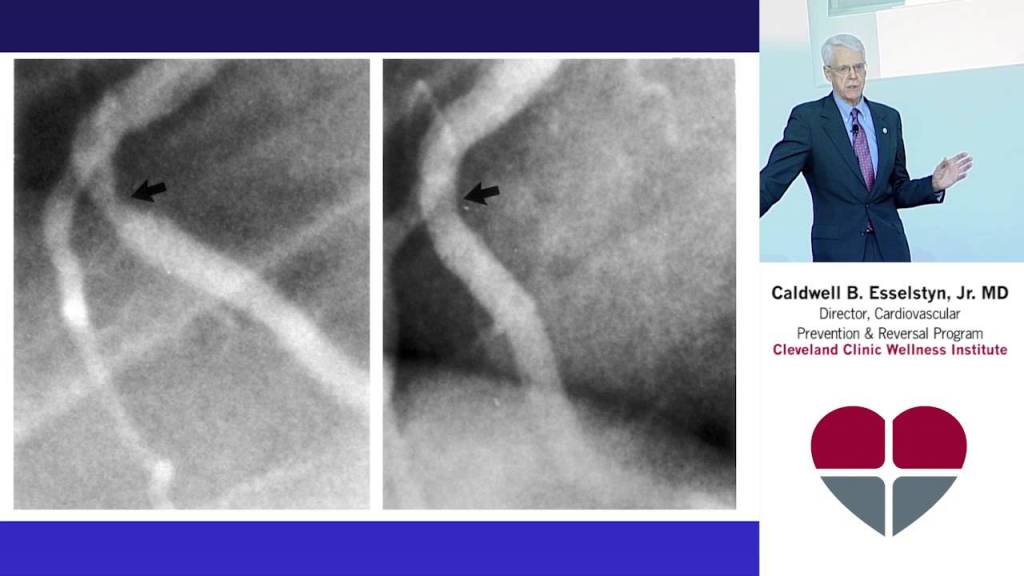
Regression of Plaque: Angiograms, a medical imaging technique, on some patients, revealed a reduction in existing arterial plaque after following the plant-based diet for several months.
Improved Blood Flow: The study also indicated improvements in blood flow through the coronary arteries.
Specific Results: 5 of the 24 patients in Dr. Esselstyn’s initial study were told by cardiologists that they had less than a year to live. Yet, 12+ years later after following the Esselstyn Program, they survived symptom-free.
Symptoms diminished (and often disappeared) within 8 to 12 weeks of starting the program. Within months, these dramatic changes occurred:
Cholesterol lowered: Patients’ average total cholesterol levels dropped from 246 mg/dL to 137 mg/dL.
No cardiac events: Before the study, the patients had 49 cardiac events (coronary bypass surgery, angioplasties, etc.). None of the patients who adhered to the eating plan experienced a cardiac event within 12 years of follow-up.
Excellent angiograms: Patients’ angiograms showed a widening of the coronary arteries — a reversal of heart disease.
Dietary Recommendations: Dr. Esselstyn promotes a diet rich in:
Fruits
Vegetables
Whole grains
Legumes (beans, lentils)
Seeds and nuts
Reversal of Coronary Disease (from the study)
Here’s a famous photo from his study that shows the reversal of coronary heart disease in one of his patients who adopted a whole plant-based diet to address their heart disease.
The Esselstyn Heart Disease Program
Created by Dr. Caldwell Esselstyn, focuses on reversing and preventing heart disease through a whole plant-based diet. Here’s a breakdown of its key aspects:
Dietary Core:
Focus: Eliminates all animal products and processed oils.
Reduce dietary fat intake, particularly saturated fat and cholesterol.
Promote weight management and a healthy lifestyle.
Improve overall cardiovascular health.
Program Features (may vary):
Educational Component: Participants learn about the connection between diet and heart disease, along with the science behind the plant-based approach.
Dietary Guidance: Receive guidance on creating and maintaining a heart-healthy, plant-based diet.
Lifestyle Modifications: May include recommendations for exercise, stress management, and sleep hygiene.
Potential Benefits (based on Dr. Esselstyn’s research):
Reduction in angina and chest pain
Regression of existing arterial plaque buildup
Improved blood flow through coronary arteries
Dr. Esselstyn’s recipes and resources
Dr. Esselstyn advocates for a whole plant-based diet to prevent and reverse heart disease. Here are some resources for finding Dr. Esselstyn’s vegan recipes:
Cookbooks:
Dr. Esselstyn’s primary resource is his cookbook: “Prevent and Reverse Heart Disease: The Power of Plant-Based Eating” (https://amzn.to/3xJU9cf). This book includes over 125 plant-based recipes that follow his dietary recommendations.
Websites:
While Dr. Esselstyn doesn’t have his own recipe website, several other resources offer recipes aligned with his dietary principles:
Esselstyn Foundation website: (https://www.dresselstyn.com/) features sample recipes from Dr. Esselstyn’s cookbook.
Websites promoting plant-based diets: Many websites dedicated to plant-based eating offer recipes suitable for the Esselstyn program. Look for recipes that are vegan, oil-free, and low in processed foods. Here are a few examples:
Natalie Portman’s story of veganism is one of evolution and a growing awareness of the impact of our choices. Here’s how her journey unfolded:
Early Start: At just nine years old, Portman witnessed a disturbing medical procedure performed on a chicken. This experience sparked a lifelong commitment to vegetarianism, a significant step towards a plant-based lifestyle.
A Book as a Catalyst: Years later, in 2011, after reading the book “Eating Animals” by Jonathan Safran Foer, Portman decided to take the next step and become vegan. The book explores the ethical and environmental implications of animal agriculture, resonating deeply with her existing values.
Compassion and Sustainability: Portman’s veganism is driven by both compassion for animals and environmental concerns. Factory farming practices have a significant ecological impact, and veganism allows her to reduce her environmental footprint.
Beyond Diet: Portman’s commitment extends beyond just food choices. She is known for her ethical fashion choices, opting for cruelty-free clothing and accessories. This holistic approach reflects her dedication to a cruelty-free lifestyle.
Using Her Platform: As a renowned actress, Portman uses her influence to promote veganism. She has narrated and produced the documentary “Eating Animals,” a film that sheds light on the realities of animal agriculture. Additionally, she champions vegan businesses and inspires others to explore plant-based living.
Natalie Portman’s journey resonates because it reflects a thoughtful and informed transition. She is not just a celebrity following a fad, but a passionate advocate who inspires others to consider the ethical and environmental implications of their choices. Her story highlights the accessibility of veganism, showing that it can be a fulfilling way to live for people from all walks of life.
If Natalie’s story inspired you, here are 20 celebrities including Natalie who are vegan, along with an approximate timeframe of how long they’ve been following a plant-based diet:
Joaquin Phoenix (45+ years): One of the longest-term vegans on this list, Joaquin Phoenix has been vocal about his veganism since childhood.
Woody Harrelson (30+ years): A strong advocate for environmental and animal rights, Woody Harrelson is known for influencing those around him to go vegan as well.
Mayim Bialik (Since childhood): Actress Mayim Bialik has been vegan for most of her life and raised her sons on a plant-based diet.
Natalie Portman (15+ years): A longtime vegan, Natalie Portman is known for her ethical choices in fashion and lifestyle.
Lizzo (4 years): After following a vegetarian diet for many years, singer Lizzo transitioned to veganism in 2020.
Lewis Hamilton (5+ years): Formula One champion Lewis Hamilton credits his plant-based diet for his peak physical performance and environmental concerns.
Venus Williams (10+ years): Tennis legend Venus Williams credits her vegan diet for her longevity and overall health in the sport.
Ellen Pompeo (15+ years): Actress Ellen Pompeo credits her plant-based lifestyle for her energy levels and overall health.
Keadilan Bryant (6 years): Baseball player Keadilan Bryant went vegan after watching a documentary about animal agriculture and credits it for his improved athletic performance.
Sia (Many years): A vocal advocate for animal rights, singer Sia has been vegan for a significant amount of time.
Ricky Gervais (Many years): Comedian Ricky Gervais is a strong advocate for animal rights and has been vegan for a long time.
Al Gore (10+ years): Former Vice President Al Gore believes a plant-based diet is crucial for environmental sustainability.
Olivia Wilde (Several years): Actress Olivia Wilde has spoken about the health benefits she’s experienced since adopting a plant-based diet.
Jillian Michaels (Mostly vegan): Celebrity fitness trainer Jillian Michaels promotes a healthy lifestyle that incorporates a mostly plant-based diet.
Billie Eilish (10 years): Pop star Billie Eilish cites animal welfare and environmental concerns as her reasons for going vegan at a young age.
Liam Hemsworth (Several years): Actor Liam Hemsworth reportedly adopted a plant-based diet after working with Woody Harrelson.
Ariana Grande (10 years): Pop singer Ariana Grande is a passionate animal lover who has been vegan since 2013.
Travis Barker (6 years): Blink-182 drummer Travis Barker credits his vegan diet for his recovery and improved health after a health scare.
Casey Affleck (Over a decade): Actor Casey Affleck is a strong advocate for animal rights and has been vegan for over ten years.
Thandiwe Newton (Over a decade): Actress Thandiwe Newton is a vegan who believes plant-based eating is a better choice for the planet.
Dear reader, If you wish to make a small donation so I can improve this blog and add more value, I would be very obliged. thanks!
We are not a multi-planetary species! We have but one home. Life on Earth is intricately woven into the fabric of its environment. From the basic necessities of survival to the complex relationships within ecosystems, all living things rely on a healthy and functioning environment for their continued existence.
Animal agriculture has a significant impact on the environment. It may not be so obvious how this is possible. Animal agriculture consumes a lot of land, uses precious resources, and contributes significantly to greenhouse emissions. It is an existential threat to the environment on the Earth and therefore our future.
Animal agriculture is a major source of greenhouse gas emissions, including methane, nitrous oxide, and carbon dioxide. These emissions come from deforestation to create grazing land, the transportation of animals, and the animals themselves.
Animal agriculture requires a lot of land for grazing and growing feed crops. This can lead to deforestation, which releases carbon dioxide into the atmosphere and disrupts ecosystems. A global shift to a plant-based diet could free up a significant amount of land to grow food for humans or reforestation.
Raising animals requires a lot of water. For example, producing one pound of beef takes about 1,500 gallons of water. In contrast, one pound of wheat takes only about 25 gallons of water.
Animal agriculture is a major driver of deforestation and habitat loss. This can lead to the extinction of species and the disruption of ecosystems. A shift to a plant-based diet could help to protect biodiversity.
Factory farms produce a lot of manure and other waste products, which can pollute water and air. A shift to a plant-based diet could help to reduce pollution.
Veganism tackles environmental issues on multiple fronts, but primarily by reducing the environmental impact of food production. A study by the University of Oxford found that a vegan diet can reduce your carbon footprint by up to 73%. It directly affects the demand equation by reducing our dependency on meat as a food source. This results in the following:
Reduced Land Use and Deforestation
Lower Greenhouse Gas Emissions
Reduced Resource Consumption
Conservation of Biodiversity
Reduced Pollution
So, while there are many reasons to go vegan, it’s a powerful tool for reducing your impact on climate change. Here’s something to think about. I feel that we collectively owe it to our children, their children, and future generations. They are innocent souls of human consciousness who are not responsible for the trajectory of our deteriorating environment. We chose to bring children into this world, the least we can do is leave them a sustainable planet to enjoy like we and our ancestors did! We can be part of the solution instead of being part of the problem by exploring veganism as a way to reduce our impact on the environment and reverse some of the ill effects.
Dear reader, If you wish to make a small donation so I can improve this blog and add more value, I would be very obliged. thanks!
Are ham and bacon worth the cruelty imposed on these innocent creatures! I am not judging as I was also among the consumers of animal meat for many years. In my personal journey, I went vegan primarily for health reasons. My goal was to disrupt the destructive path I was on toward chronic disease, illness, and medication. Little did I know that by going vegan, I would become educated about other just as critical reasons for doing so.
I had no idea about the animal cruelty being imposed across factory farms globally. Economic profit and efficiency are prioritized over animal welfare in these factories. Animals are housed in extremely cramped cages or areas with very little to no physical freedom. Animal parents and their calves are segregated leading to psychological turmoil. They are poked and prodded literally. They are fed steroids leading to quick and unnatural growth. They live in their own feces and filth and are devoid of dignity. The animals are debeaked, castrated, and tail-docked without pain management to prevent injuries in crowded conditions.
Sure, there may be exceptions in such practices, but what kind of life do these animals endure? If one looks at these animals as just meat, is there a place for empathy for their dignity, emotions, and pain? Ever wonder why such cruelty is not common knowledge? It doesn’t make the daily local breaking news segments. Why is that? Perhaps as a species, we are ashamed of our shortcomings in values especially when these shortcomings are directed toward a species other than ours. Perhaps we are just ignorant. We justify that human beings are the superior species on earth. If animals are being raised and bred to serve as our food, why should we give them a second thought? Can we be so narrow-minded or selfish?
This is a core concern for many vegans. They object to the way animals are raised and slaughtered for food and choose a vegan diet to avoid contributing to this practice. Given that the world is run on economics we can use the key principle of supply and demand. By going vegan, we directly impact the demand for meat and therefore the need for animal farming.
When I realized the full impact of my decision to go vegan and that it had other surprising benefits, I became elated. It felt good to not be part of a human practice that harms animals. This resonated with me at a deep spiritual level. Why would these other creatures be placed on Earth? It cannot be to be mistreated by humans. Those who do not see the cruelty are either naive, unaware, or choose to suppress it out of guilt. I too was unaware and even when I became aware I initially struggled to give up my diet. It is out of sight and therefore out of mind for many of us. It wasn’t until I became vegan, that I realized the flaw in my thinking. Becoming vegan has raised my spirituality and has allowed me to grow my wisdom of all life.
Growing up as a Hindu, I remember being taught about ‘ahimsa’ or non-violence. It was the basis on which India obtained its independence from British imperialism at the time. It is common knowledge that Mahatma Gandhi believed in non-violence and he took that approach for his advocacy and protest against the imperial rule. I was also taught that all creatures are to be respected and we are all living things that are connected. The Hindu principle of rebirth or reincarnation doesn’t exclude taking an animal form other than a human. Depending upon our ‘Karma’, we could remain stuck in the cycle of birth and death and can be reborn as a cow, a pig, or a chicken. Hinduism emphasizes and extends respect and compassion towards all living things. It discourages unnecessary harm and promotes peaceful coexistence.
By going vegan, and reflecting on my decision, I was reminded of my childhood religious teachings and was able to look at my lifestyle through a spiritual lens. Knowing that my journey was aligned with my faith, and wisdom of a religion that was centuries old was also a big assurance for me.
Anyone who has had a pet knows, that these animals love, give, express joy, and feel pain. The animals we farm are no different. The calf and the mother cow experience an immense sense of pain when they are separated from each other. These animals can sense their imminent death and they express extreme anxiety. We let our taste for their meat keep us from seeing the truth about animal cruelty. Something to reflect upon.
Dear reader, If you wish to make a small donation so I can improve this blog and add more value, I would be very obliged. thanks!
After being a vegetarian for 2 years, I announced much to my family’s chagrin, that I am going vegan! My family’s reaction was not hard to decipher. There was terror written all over my wife’s face. My kids were concerned too. It wasn’t completely a shock as I had been watching videos and discussing my findings with anyone willing to listen in my household. I explained that I was willing to go it alone and that nobody needed to make the drastic move with me.
After a day or two of mulling this over, my wife and kids agreed to join my decision. I was relieved as this was now also their own decision. However, they reminded me that their food choices would remain flexible outside the home. My wife also wasn’t ready to give up milk in her coffee. This was a win all around. I was also doing this to be an example of change for the better for our entire family, not just myself.
Giving up milk was not a big issue for our family. My son has had an allergy to dairy products since childhood, so we were used to cooking with oat milk or coconut milk for those creamy sauces. We used to buy non-dairy yogurt for my son. But now the rest of us were giving up dairy yogurts too. No more eggs either! More questions! How would we eat cereal? How do you bake without eggs or milk? What about deserts? What about my sweet tooth? What will we eat at someone’s home? Perhaps we won’t be invited for a meal ever again!
We learned that the term vegan was not as well known as we thought. Is it like being gluten-free, was a common question everyone asked. Explaining that I was a vegan by choice and that it had nothing to do with dietary allergies or celiac disease became a usual reaction. Some thought that going vegan was part of a snobbish lifestyle looking down on others when this was furthest from the truth. I came to learn that some vegans try to convert others to adopt this lifestyle in a grand gesture to save everyone. I am not one of them! I prefer to convince myself based on research and data and let others do the same.
The purpose of creating this blog is not to arm-twist you into becoming a vegan but to walk you through my personal journey in this transition. Clearly, it doesn’t just affect me, it also affects my loved ones. You may be curious or grappling with the same questions or issues in your life. To each their own. I respect that we are all on our own journeys of life. My goal is to provide my perspective and experience which you can use as entertainment or valued input.
So, becoming a vegan had consequences both good and bad!
Dear reader, If you wish to make a small donation so I can improve this blog and add more value, I would be very obliged. thanks!






 Power Plants